

Does A Homeowner Have To Clean Up A House That Falls Into A Lake Due To Erosion

Water pollution (or aquatic pollution) is the contamination of h2o bodies, usually as a result of human activities, in such a manner that negatively affects its legitimate uses.[i] : half dozen Water pollution reduces the ability of the body of water to provide the ecosystem services that it would otherwise provide. Water bodies include for example lakes, rivers, oceans, aquifers, reservoirs and groundwater. Water pollution results when contaminants are introduced into these water bodies. Water pollution can usually be attributed to one of four sources: sewage, industry, agronomics, and urban runoff including stormwater.[2] For case, releasing inadequately treated wastewater into natural waters can lead to degradation of these aquatic ecosystems. Water pollution can too atomic number 82 to water-borne diseases for people using polluted water for drinking, bathing, washing or irrigation.[3] Supplying clean drinking water is an important ecosystem service provided by some freshwater systems, but approximately 785 million people in the world practise not have access to make clean drinking water considering of pollution.[4]
H2o pollution tin be classified as surface water pollution (for case lakes, streams, estuaries, and parts of the ocean in marine pollution) or groundwater pollution. Sources of water pollution are either point sources or not-point sources. Point sources take 1 identifiable crusade, such as a tempest drain, a wastewater handling found or an oil spill. Non-betoken sources are more diffuse, such as agronomical runoff.[5] Pollution is the result of the cumulative effect over time.
Pollution may take the form of toxic substances (eastward.one thousand., oil, metals, plastics, pesticides, persistent organic pollutants, industrial waste products), stressful atmospheric condition (e.g., changes of pH, hypoxia or anoxia, stressful temperatures, excessive turbidity, unpleasant taste or aroma, and changes of salinity), or pathogenic organisms. Contaminants may include organic and inorganic substances. Estrus can also be a pollutant, and this is called thermal pollution. A mutual crusade of thermal pollution is the use of water as a coolant past power plants and industrial manufacturers.
Control of water pollution requires appropriate infrastructure and management plans as well as legislation. Engineering solutions tin can include improving sanitation, sewage treatment, industrial wastewater treatment, agricultural wastewater treatment, erosion control, sediment control and command of urban runoff (including stormwater direction). Effective control of urban runoff includes reducing speed and quantity of menstruation.
Definition

A practical definition of water pollution is: "Water pollution is the improver of substances or energy forms that direct or indirectly modify the nature of the water torso in such a fashion that negatively affects its legitimate uses".[one] : vi Therefore, pollution is associated with concepts attributed to humans, namely the negative alterations and the uses of the water body. Water is typically referred to as polluted when it is impaired by anthropogenic contaminants. Due to these contaminants it either does non back up a human use, such equally drinking h2o, or undergoes a marked shift in its ability to back up its biotic communities, such every bit fish.
Contaminants and their sources
Overview
If the water pollution stems from sewage (municipal wastewater), the main pollutants are: suspended solids, biodegradable organic matter, nutrients and pathogenic organisms.[one] : half dozen
| Pollutant | Chief representative parameter | Possible effect of the pollutant |
|---|---|---|
| Suspended solids | Total suspended solids |
|
| Biodegradable organic matter | Biological oxygen demand |
|
| Nutrients |
|
|
| Pathogens |
| Waterborne diseases |
| Non-biodegradable organic matter |
|
|
| Inorganic dissolved solids |
|
|
Pathogens from sewage and agriculture

Poster to teach people in South Asia about human activities leading to the pollution of water sources
Disease-causing microorganisms are referred to as pathogens. The major groups of pathogenic organisms are: (a) bacteria, (b) viruses, (c) protozoans and (d) helminths.[1] : 47 In practise, indicator organisms are used to investigate pathogenic pollution of water because the detection of pathogenic organisms in water sample is difficult and plush, considering of their low concentrations. The indicators (bacterial indicator) of fecal contamination of water samples most commonly used are: total coliforms (TC), fecal coliforms (FC) or thermotolerant coliforms, escherichia coli (EC).[1] : 47
Pathogens tin can produce waterborne diseases in either human or animal hosts.[seven] Some microorganisms sometimes constitute in contaminated surface waters that have caused homo wellness problems include: Burkholderia pseudomallei, Cryptosporidium parvum, Giardia lamblia, Salmonella, norovirus and other viruses, parasitic worms including the Schistosoma type. [eight]
The source of high levels of pathogens in water bodies can be from human feces (due to open defecation), sewage, blackwater, manure that has constitute its way into the water body. The crusade for this can be lack of sanitation or poorly performance on-site sanitation systems (septic tanks, pit latrines), sewage treatment plants without disinfection steps, sanitary sewer overflows and combined sewer overflows (CSOs)[ix] during tempest events and intensive agronomics (poorly managed livestock operations).
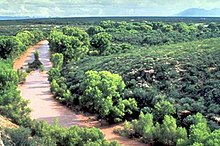
Muddy river polluted past sediment.
Non-biodegradable organic compounds
Not-biodegradable organic substances tin enter water bodies from a diversity of sources, for example industrial wastewater. Many of these chemical substances are toxic.[10] : 229
- Chemicals from insecticides and herbicides.
- Petroleum hydrocarbons, including fuels (gasoline, diesel fuel, jet fuels, and fuel oil) and lubricants (motor oil), and fuel combustion byproducts, from oil spills or storm water runoff[eleven]
- Volatile organic compounds, such equally industrial solvents, from improper storage.
- Persistent organic pollutants, for instance per- and polyfluoroalkyl substances (PFAS),[12] [thirteen]
- Organochlorides, polychlorinated biphenyl (PCBs), trichloroethylene, perchlorate (these are currently or were in the past used as pesticides, solvents, pharmaceuticals, and industrial chemicals).
The following compounds tin all reach water bodies via raw sewage or even treated sewage discharges:
- Various chemic compounds found in personal hygiene and cosmetic products.
- Environmental persistent pharmaceutical pollutants, which can include various pharmaceutical drugs and their metabolites (encounter also drug pollution), such as antidepressant drugs, antibiotics or the contraceptive pill.
- Metabolites of illicit drugs (come across too wastewater epidemiology), for example methamphetamine and ecstasy.[xiv] [15]
- Disinfection by-products found in chemically disinfected drinking water (whilst these chemicals can be a pollutant in the water distribution network, they are fairly volatile and therefore not usually found in environmental waters).[xvi]
- Hormones (from fauna husbandry and rest from human hormonal contraception methods) and synthetic materials such as phthalates that mimic hormones in their action. These tin can have adverse impacts even at very depression concentrations on the natural biota and potentially on humans if the water is treated and utilized for drinking water.[17] [18] [xix]
Persistent organic pollutants
Persistent organic pollutants (POPs), sometimes known as "forever chemicals", are organic compounds that are resistant to environmental deposition through chemic, biological, and photolytic processes.[20] They are toxic chemicals that adversely affect man health and the environment around the world. Because they tin exist transported past air current and water, most POPs generated in one state can and do touch people and wildlife far from where they are used and released. The event of POPs on homo and ecology health was discussed, with intention to eliminate or severely restrict their product, past the international customs at the Stockholm Convention on Persistent Organic Pollutants in 2001. The United States has taken strong domestic activity to reduce emissions of POPs. For example, none of the original POPs pesticides listed in the Stockholm Convention is registered for sale and distribution in the United States today and in 1978, Congress prohibited the industry of polychlorinated biphenyl (PCB) and severely restricted the use of remaining PCB stocks. In add-on, since 1987, the Environmental Protection Agency and united states of america have effectively reduced environmental releases of dioxins and furans to state, air, and h2o from U.S. sources.
Environmental persistent pharmaceutical pollutants
Inorganic contaminants

Inorganic water pollutants include for example:
- Acerbity acquired by industrial discharges (especially sulfur dioxide from ability plants) or by increased carbon dioxide concentrations in the temper (see also ocean acidification). In industrialized areas, acid rain has in the past resulted in pollution of lakes and rivers due to air pollution with dissolved oxides of sulfur and nitrogen.[ citation needed ]
- Ammonia from nutrient processing waste
- Heavy metals from motor vehicles (via urban storm water runoff)[eleven] [22] and acid mine drainage
- Nitrates and phosphates, from sewage and agriculture (see food pollution)
- Silt (sediment) in runoff from construction sites or sewage, logging, slash and burn practices or state immigration sites.
Solid waste matter and plastics
Solid waste can enter water bodies through untreated sewage, combined sewer overflows, urban runoff, people discarding garbage into the environs, wind carrying municipal solid waste product from landfills and and so along. This results in macroscopic pollution– large visible items polluting the water– merely also microplastics pollution that is not directly visible. The terms marine debris and marine plastic pollution are used in the context of pollution of oceans.
Microplastics persist in the environment at high levels, particularly in aquatic and marine ecosystems, where they cause water pollution.[23] 35% of all ocean microplastics come from textiles/clothing, primarily due to the erosion of polyester, acrylic, or nylon-based wearable, often during the washing process.[24]
Diverse contaminants from industrial wastewater
If the pollution stems from industrial wastewater, and then pollutants of business organization may include:
- Heavy metals, including mercury, pb, and chromium
- Organic matter such as food waste, slaughterhouse waste material, paper fibers, plant fabric, etc.;
- Inorganic particles such as sand, grit, metal particles, rubber residues from tires, ceramics, etc.;
- Toxins such as pesticides, poisons, herbicides, etc.
- Pharmaceuticals, endocrine disrupting compounds, hormones, perfluorinated compounds, siloxanes, drugs of abuse and other hazardous substances [25] [26] [27]
- Microplastics such as polyethylene and polypropylene beads, polyester and polyamide [28]
- Thermal pollution from power stations and industrial manufacturers
- Radionuclides from uranium mining, processing nuclear fuel, operating nuclear reactors, or disposal of nuclear waste.
Types of surface h2o pollution
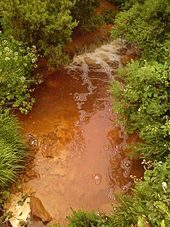
Pollution of rivers, lakes and oceans
Surface water pollution includes pollution of rivers, lakes and oceans. A subset of surface water pollution is marine pollution which affects the oceans. Food pollution refers to contamination by excessive inputs of nutrients.
Globally, about four.five billion people do not have safely managed sanitation as of 2017, according to an estimate by the Joint Monitoring Programme for H2o Supply and Sanitation.[four] Lack of access to sanitation is concerning and oftentimes leads to water pollution, east.yard. via the practice of open defecation: during pelting events or floods, the human carrion are moved from the ground where they were deposited into surface waters. Uncomplicated pit latrines may as well get flooded during rain events.
Marine pollution
Marine pollution occurs when substances used or spread past humans, such as industrial, agronomical and residential waste product, particles, dissonance, excess carbon dioxide or invasive organisms enter the ocean and crusade harmful effects in that location. The majority of this waste (80%) comes from land-based activity, although marine transportation significantly contributes as well.[29] Since near inputs come from land, either via the rivers, sewage or the atmosphere, it means that continental shelves are more vulnerable to pollution. Air pollution is also a contributing factor by carrying off iron, carbonic acid, nitrogen, silicon, sulfur, pesticides or dust particles into the ocean.[thirty] The pollution often comes from nonpoint sources such every bit agricultural runoff, wind-blown debris, and dust. These nonpoint sources are largely due to runoff that enters the ocean through rivers, simply current of air-blown droppings and dust tin can also play a role, as these pollutants tin can settle into waterways and oceans.[31] Pathways of pollution include direct discharge, land runoff, transport pollution, atmospheric pollution and, potentially, deep sea mining.
Food pollution
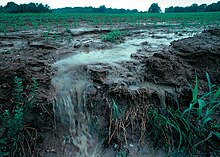
Nutrient pollution, a form of water pollution, refers to contamination by excessive inputs of nutrients. It is a primary cause of eutrophication of surface waters, in which excess nutrients, unremarkably nitrogen or phosphorus, stimulate algal growth.[32] Sources of nutrient pollution include surface runoff from subcontract fields and pastures, discharges from septic tanks and feedlots, and emissions from combustion. Raw sewage is a large correspondent to cultural eutrophication since sewage is loftier in nutrients. Releasing raw sewage into a big water body is referred to as sewage dumping, and still occurs all over the globe. Excess reactive nitrogen compounds in the environment are associated with many large-calibration environmental concerns. These include eutrophication of surface waters, harmful algal blooms, hypoxia, acrid pelting, nitrogen saturation in forests, and climate change.[33]
| Food types | Eutrophying emissions (g POfour iii-eq per 100g protein) |
|---|---|
| Beef | 365.iii |
| Farmed fish | 235.1 |
| Farmed crustaceans | 227.2 |
| Cheese | 98.iv |
| Lamb and mutton | 97.ane |
| Pork | 76.four |
| Poultry | 48.7 |
| Eggs | 21.eight |
| Groundnuts | 14.one |
| Peas | 7.5 |
| Tofu | 6.ii |
Salinization

Salt consists of sodium chloride. Through primary and secondary salinization, information technology intrudes into freshwater and damages the health of humans and other organisms.
Freshwater salinization is the process of salty runoff contaminating freshwater ecosystems, which can harm aquatic species in certain quantities and contaminate drinking water.[35] It is ofttimes measured past the increased amount of dissolved minerals than what is considered usual for the area beingness observed.[36]
Naturally occurring salinization is referred to as primary salinization; this includes rainfall, rock weathering, seawater intrusion, and aerosol deposits.[37] Human-induced salinization is termed as secondary salinization, with the use of de-icing route salts as the most common form of runoff.[38] Approximately 37% of the drainage in the United states of america has been effected by salinization in the past century.[35] The EPA has defined two thresholds for good for you salinity levels in freshwater ecosystems: 230 mg/L Cl− for average salinity levels and 860 mg/L Cl− for acute inputs.[39]
Thermal pollution

Thermal pollution, sometimes called "thermal enrichment", is the degradation of h2o quality by any procedure that changes ambience water temperature. Thermal pollution is the rise or fall in the temperature of a natural body of water caused by human being influence. Thermal pollution, different chemical pollution, results in a change in the concrete properties of h2o. A common cause of thermal pollution is the use of water as a coolant by ability plants and industrial manufacturers. Urban runoff—storm[forty]water discharged to surface waters from rooftops, roads and parking lots—and reservoirs can also be a source of thermal pollution.[41] Thermal pollution can also exist caused by the release of very cold water from the base of reservoirs into warmer rivers.
Elevated water temperatures decrease oxygen levels (due to lower levels of dissolved oxygen, as gases are less soluble in warmer liquids), which tin can kill fish (which may then rot) and alter nutrient concatenation limerick, reduce species biodiversity, and foster invasion by new thermophilic species.[42] : 179 [ten] : 375
Biological pollution
The introduction of aquatic invasive organisms is a course of water pollution as well. It causes biological pollution.[43]
Groundwater pollution
Pollution from point sources
Point source water pollution refers to contaminants that enter a waterway from a single, identifiable source, such as a pipe or ditch. Examples of sources in this category include discharges from a sewage treatment constitute, a factory, or a city storm drain.
The U.S. Clean Water Act (CWA) defines indicate source for regulatory enforcement purposes (see U.s. regulation of point source water pollution).[45] The CWA definition of point source was amended in 1987 to include municipal storm sewer systems, as well as industrial storm h2o, such every bit from construction sites.[46]
Sewage
Sewage typically consists of 99.9% h2o and 0.1% solids.[47] Sewage contributes many classes of nutrients that lead to eutrophication. It is a major source of phosphate for instance.[48] Sewage is often contaminated with diverse compounds establish in personal hygiene, cosmetics, pharmaceutical drugs (see also drug pollution), and their metabolites[49] [l] Water pollution due to environmental persistent pharmaceutical pollutants can take broad-ranging consequences. When sewers overflow during storm events this can lead to h2o pollution from untreated sewage. Such events are called germ-free sewer overflows or combined sewer overflows.
Industrial wastewater

Industrial processes that use water also produce wastewater. Using the Us as an example, the chief industrial consumers of water (using over 60% of the total consumption) are power plants, petroleum refineries, iron and steel mills, pulp and paper mills, and food processing industries.[52] Some industries belch chemic wastes, including solvents and heavy metals (which are toxic) and other harmful pollutants such as nutrients. Sure industries (eastward.g. food processing) discharge loftier concentrations of biochemical oxygen demand (BOD) and oil and grease.[53] : 180 [x] Some industrial discharges include persistent organic pollutants such as per- and polyfluoroalkyl substances (PFAS).[12] [13]
Oil spills
An oil spill is the release of a liquid petroleum hydrocarbon into the environment, especially the marine ecosystem, due to human activity, and is a form of pollution. The term is usually given to marine oil spills, where oil is released into the ocean or coastal waters, but spills may as well occur on land. Oil spills may exist due to releases of rough oil from tankers, offshore platforms, drilling rigs and wells, likewise as spills of refined petroleum products (such every bit gasoline, diesel) and their past-products, heavier fuels used by large ships such every bit bunker fuel, or the spill of whatever oily decline or waste oil.
Pollution from nonpoint sources
Nonpoint source (NPS) pollution refers to lengthened contamination (or pollution) of water or air that does not originate from a unmarried discrete source. This blazon of pollution is often the cumulative effect of small amounts of contaminants gathered from a large area. It is in contrast to point source pollution which results from a single source. Nonpoint source pollution generally results from land runoff, precipitation, atmospheric degradation, drainage, seepage, or hydrological modification (rainfall and snowmelt) where tracing pollution dorsum to a single source is difficult.[54] Nonpoint source water pollution affects a water body from sources such as polluted runoff from agricultural areas draining into a river, or wind-borne droppings bravado out to ocean. Nonpoint source air pollution affects air quality, from sources such every bit smokestacks or car tailpipes. Although these pollutants have originated from a indicate source, the long-range transport ability and multiple sources of the pollutant make it a nonpoint source of pollution; if the discharges were to occur to a body of h2o or into the atmosphere at a unmarried location, the pollution would be single-point.
Agronomics
Agronomics is a major contributor to h2o pollution from nonpoint sources. The employ of fertilizers as well as surface runoff from subcontract fields, pastures and feedlots leads to nutrient pollution.[55] In addition to plant-focused agronomics, fish-farming is also a source of pollution. Additionally, agronomical runoff ofttimes contains high levels of pesticides.[52]
Measurement

Water pollution may be analyzed through several broad categories of methods: concrete, chemical and biological. Some methods may be conducted in situ, without sampling, such equally temperature. Others involve collection of samples, followed by specialized analytical tests in the laboratory. Standardized, validated analytical examination methods, for water and wastewater samples take been published.[56]
Mutual concrete tests of water include temperature, Specific conductance or electric conductance (EC) or conductivity, solids concentrations (eastward.g., total suspended solids (TSS)) and turbidity. Water samples may be examined using analytical chemical science methods. Many published test methods are bachelor for both organic and inorganic compounds. Frequently used parameters that are quantified are pH, biochemical oxygen demand (BOD),[57] : 102 chemical oxygen demand (COD),[57] : 104 dissolved oxygen (DO), total hardness, nutrients (nitrogen and phosphorus compounds, e.g. nitrate and orthophosphates), metals (including copper, zinc, cadmium, lead and mercury), oil and grease, total petroleum hydrocarbons (TPH), surfactants and pesticides.
Sampling
Biological testing
The use of a biomonitor is described as biological monitoring. This refers to the measurement of specific properties of an organism to obtain information on the surrounding concrete and chemical surround.[58] Biological testing involves the use of plant, creature or microbial indicators to monitor the health of an aquatic ecosystem. They are any biological species or grouping of species whose function, population, or condition can reveal what degree of ecosystem or environmental integrity is present.[59] I example of a group of bio-indicators are the copepods and other modest water crustaceans that are present in many water bodies. Such organisms tin can be monitored for changes (biochemical, physiological, or behavioral) that may indicate a trouble within their ecosystem.
Impacts
Ecosystems
Water pollution is a major global ecology problem considering it can outcome in the degradation of aquatic ecosystems.[ citation needed ] The specific contaminants leading to pollution in water include a wide spectrum of chemicals, pathogens, and physical changes such equally elevated temperature. While many of the chemicals and substances that are regulated may be naturally occurring (calcium, sodium, atomic number 26, manganese, etc.) the concentration ordinarily determines what is a natural component of water and what is a contaminant. High concentrations of naturally occurring substances can have negative impacts on aquatic flora and fauna. Oxygen-depleting substances may exist natural materials such as constitute matter (eastward.g. leaves and grass) too as homo-fabricated chemicals. Other natural and anthropogenic substances may crusade turbidity (cloudiness) which blocks lite and disrupts plant growth, and clogs the gills of some fish species.[ citation needed ]
In that location is concern that h2o pollution can damage phytoplankton in the oceans who produce 70% of oxygen and remove a large office of carbon dioxide from the atmosphere.[60] [ self-published source? ]
Public wellness and waterborne diseases
A study published in 2017 stated that "polluted water spread gastrointestinal diseases and parasitic infections and killed ane.8 million people" (these are also referred to every bit waterborne diseases).[61]
Eutrophication from nitrogen pollution

Nitrogen pollution (a course of water pollution where excessive amounts of nutrients are added to a water trunk), can cause eutrophication, especially in lakes. Eutrophication is an increase in the concentration of chemical nutrients in an ecosystem to an extent that increases the primary productivity of the ecosystem. Depending on the degree of eutrophication, subsequent negative environmental effects such as anoxia (oxygen depletion) and severe reductions in h2o quality may occur, affecting fish and other beast populations.[1] : 131
Eutrophication is the process by which an unabridged body of water, or parts of it, becomes progressively enriched with minerals and nutrients, peculiarly nitrogen and phosphorus. It has also been defined as "nutrient-induced increment in phytoplankton productivity".[62] : 459 Water bodies with very low food levels are termed oligotrophic and those with moderate nutrient levels are termed mesotrophic. Advanced eutrophication may as well be referred to equally dystrophic and hypertrophic atmospheric condition.[63] Eutrophication in freshwater ecosystems is almost always caused by excess phosphorus [64] while in marine systems nitrogen and phosphorus may both be important in unlike locations.[65] [66]
Ocean acidification
Ocean acidification is some other touch of water pollution. Bounding main acidification is the ongoing decrease in the pH value of the Earth's oceans, caused past the uptake of carbon dioxide (CO2) from the temper.[67]
Prevalence

Share of water bodies with practiced water quality in 2020 (a water body is classified every bit "good" quality if at to the lowest degree eighty% of monitoring values meet target quality levels, run across besides SDG 6, Indicator half-dozen.3.2)
Water pollution is a problem in developing countries as well as in developed countries.
By country
For case, h2o pollution in India and China is wide spread. About 90 percent of the water in the cities of China is polluted.[68]
Control and reduction

View of secondary treatment reactors (activated sludge process) at the Blue Plains Advanced Wastewater Handling Plant, Washington, D.C., United States. Seen in the distance are the sludge digester edifice and thermal hydrolysis reactors.
Pollution control philosophy
One aspect of environmental protection are mandatory regulations merely they are but part of the solution. Other important tools in pollution control include environmental education, economic instruments, market place forces and stricter enforcements.[69] Standards can be "precise" (for a defined quantifiable minimum or maximum value for a pollutant), or "imprecise" which would require the employ of All-time Bachelor Applied science (BAT) or Best Practicable Ecology Option (BPEO).[69] Market-based economical instruments for pollution control can include: charges, subsidies, deposit or refund schemes, the creation of a market in pollution credits, and enforcement incentives.[69]
Moving towards a holistic approach in chemical pollution control combines the following approaches: Integrated control measures, trans-boundary considerations, complementary and supplementary control measures, life-cycle considerations, the impacts of chemical mixtures.[69]
Control of water pollution requires appropriate infrastructure and management plans. The infrastructure may include wastewater treatment plants, for case sewage handling plants and industrial wastewater treatment plants. Agricultural wastewater treatment for farms, and erosion command at structure sites can also help foreclose h2o pollution. Effective control of urban runoff includes reducing speed and quantity of flow.
Water pollution requires ongoing evaluation and revision of water resource policy at all levels (international downwards to individual aquifers and wells).
Sanitation and sewage treatment

Municipal wastewater (or sewage) tin can exist treated past centralized sewage handling plants, decentralized wastewater systems, nature-based solutions[70] or in onsite sewage facilities and septic tanks. For instance, waste stabilization ponds are a low cost treatment option for sewage, particularly for regions with warm climates.[ane] : 182 UV light (sunlight) can be used to degrade some pollutants in waste product stabilization ponds (sewage lagoons).[71] The utilize of safely managed sanitation services would prevent h2o pollution caused by lack of access to sanitation.[4]
Well-designed and operated systems (i.e., with secondary handling stages or more than advanced tertiary treatment) can remove ninety percent or more of the pollutant load in sewage.[72] Some plants have additional systems to remove nutrients and pathogens. While such advanced handling techniques will undoubtedly reduce the discharges of micropollutants, they can too result in large financial costs, equally well as environmentally undesirable increases in energy consumption and greenhouse gas emissions.[73]
Sewer overflows during storm events tin can exist addressed past timely maintenance and upgrades of the sewerage system. In the U.s., cities with large combined systems have not pursued system-wide separation projects due to the high toll,[74] simply take implemented fractional separation projects and green infrastructure approaches.[75] In some cases municipalities have installed additional CSO storage facilities[76] or expanded sewage handling capacity.[77]
Industrial wastewater treatment
Industrial wastewater treatment describes the processes used for treating wastewater that is produced by industries as an undesirable by-product. Later on treatment, the treated industrial wastewater (or effluent) may be reused or released to a sanitary sewer or to a surface water in the environment. Some industrial facilities generate wastewater that can be treated in sewage treatment plants. Most industrial processes, such every bit petroleum refineries, chemic and petrochemical plants have their own specialized facilities to treat their wastewaters and then that the pollutant concentrations in the treated wastewater comply with the regulations regarding disposal of wastewaters into sewers or into rivers, lakes or oceans.[78] : 1412 This applies to industries that generate wastewater with high concentrations of organic matter (e.g. oil and grease), toxic pollutants (e.yard. heavy metals, volatile organic compounds) or nutrients such as ammonia.[79] : 180 Some industries install a pre-treatment system to remove some pollutants (e.g., toxic compounds), and then belch the partially treated wastewater to the municipal sewer system.[lxxx] : 60
Agricultural wastewater handling
Management of erosion and sediment command

Sediment from structure sites can exist managed by installation of erosion controls, such every bit mulching and hydroseeding, and sediment controls, such as sediment basins and silt fences.[82] Discharge of toxic chemicals such as motor fuels and physical washout can be prevented by apply of spill prevention and control plans, and specially designed containers (e.g. for concrete washout) and structures such as overflow controls and diversion berms.[83]
Erosion acquired past deforestation and changes in hydrology (soil loss due to water runoff) likewise results in loss of sediment and, potentially, h2o pollution.[84] [85]
Control of urban runoff (storm h2o)
Effective control of urban runoff involves reducing the velocity and period of stormwater, as well as reducing pollutant discharges. Local governments use a multifariousness of stormwater management techniques to reduce the furnishings of urban runoff. These techniques, called best management practices for water pollution (BMPs) in some countries, may focus on h2o quantity command, while others focus on improving water quality, and some perform both functions.[86]
Legislation
Some examples for legislation to control water pollution are listed beneath:
- In the Philippines, Republic Deed 9275, otherwise known every bit the Philippine Clean H2o Act of 2004,[87] is the governing police force on wastewater direction. It states that information technology is the country's policy to protect, preserve and revive the quality of its fresh, brackish and marine waters, for which wastewater direction plays a particular function.[87]
- The Clean Water Act is the primary federal law in the United states of america governing water pollution in surface waters.[88] It is implemented by the U.S. Environmental Protection Agency in collaboration with states, territories, and tribes.[89] Groundwater protection provisions are included in the Prophylactic Drinking Water Act, Resources Conservation and Recovery Act, and the Superfund act.
See besides
- Aquatic toxicology
- Ecology bear on of pesticides § H2o
- Pollution
- Trophic state index (water quality indicator for lakes)
- Water handling
- Water resources direction
References
- ^ a b c d e f g h Von Sperling, M. (2015). "Wastewater Characteristics, Treatment and Disposal". IWA Publishing. vi. doi:ten.2166/9781780402086. ISBN9781780402086.
- ^ Westward. Wesley Eckenfelder Jr. (2000). Kirk‐Othmer Encyclopedia of Chemic Engineering science (1 ed.). John Wiley & Sons, Inc. doi:10.1002/0471238961.1615121205031105.a01. ISBN978-0-471-48494-3.
- ^ "Water Pollution". Environmental Health Teaching Plan. Cambridge, MA: Harvard T.H. Chan School of Public Health. July 23, 2013. Retrieved September 18, 2021.
- ^ a b c WHO and UNICEF (2017) Progress on Drinking Water, Sanitation and Hygiene: 2017 Update and SDG Baselines. Geneva: Earth Health Organisation (WHO) and the United Nations Children's Fund (UNICEF), 2017
- ^ Moss, Brian (2008). "H2o Pollution past Agriculture". Phil. Trans. R. Soc. Lond. B. 363 (1491): 659–666. doi:10.1098/rstb.2007.2176. PMC2610176. PMID 17666391.
- ^ Guidelines for the Safe Use of Wastewater, Excreta and Greywater, Volume 4 Excreta and Greywater Utilise in Agriculture (third ed.). Geneva: World Health Arrangement. 2006. ISBN9241546859.
- ^ Pollution: Causes, effects, and control. Roy M. Harrison (5th ed.). Cambridge, UK: Imperial Society of Chemistry. 2013. ISBN978-one-78262-560-5. OCLC 1007100256.
{{cite book}}: CS1 maint: others (link) - ^ Schueler, Thomas R. "Microbes and Urban Watersheds: Concentrations, Sources, & Pathways." Reprinted in The Exercise of Watershed Protection. Archived January 8, 2013, at the Wayback Car 2000. Centre for Watershed Protection. Ellicott City, Dr..
- ^ Written report to Congress: Impacts and Control of CSOs and SSOs (Report). EPA. August 2004. EPA 833-R-04-001.
- ^ a b c Laws, Edward A. (2018). Aquatic Pollution: An Introductory Text (quaternary ed.). Hoboken, NJ: John Wiley & Sons. ISBN9781119304500.
- ^ a b Thousand. Allen Burton, Jr., Robert Pitt (2001). Stormwater Effects Handbook: A Toolbox for Watershed Managers, Scientists, and Engineers. New York: CRC/Lewis Publishers. ISBN0-87371-924-7.
{{cite book}}: CS1 maint: uses authors parameter (link) Chapter 2. - ^ a b Johnson, Marker S.; Cadet, Robert C.; Cousins, Ian T.; Weis, Christopher P.; Fenton, Suzanne E. (2021). "Estimating Environmental Take a chance and Risks from Exposure to Per‐ and Polyfluoroalkyl Substances (PFASs): Outcome of a SETAC Focused Topic Meeting". Ecology Toxicology and Chemical science. 40 (3): 543–549. doi:x.1002/etc.4784. ISSN 0730-7268. PMC8387100. PMID 32452041.
- ^ a b Sinclair, Georgia G.; Long, Sara M.; Jone southward, Oliver A.H. (2020). "What are the effects of PFAS exposure at environmentally relevant concentrations?". Chemosphere. 258: 127340. Bibcode:2020Chmsp.258l7340S. doi:10.1016/j.chemosphere.2020.127340. PMID 32563917. S2CID 219974801.
- ^ Knight, Kathryn (2021). "Freshwater methamphetamine pollution turns brown trout into addicts". Periodical of Experimental Biology. 224 (xiii): jeb242971. doi:x.1242/jeb.242971. ISSN 0022-0949.
- ^ De Lorenzo, Daniela (June 18, 2021). "MDMA Gangs Are Literally Polluting Europe". Vice Globe News. Brooklyn, NY: Vice Media Grouping.
- ^ Alexandrou, Lydon; Meehan, Barry J.; Jones, Oliver A.H. (2018). "Regulated and emerging disinfection by-products in recycled waters". Science of the Total Environment. 637–638: 1607–1616. Bibcode:2018ScTEn.637.1607A. doi:10.1016/j.scitotenv.2018.04.391. PMID 29925195.
- ^ "Environment Agency (archive) – Persistent, bioaccumulative and toxic PBT substances". Environs Agency (United kingdom). Archived from the original on Baronial iv, 2006. Retrieved November fourteen, 2012.
- ^ Natural Environmental Research Quango – River sewage pollution found to be disrupting fish hormones. Planetearth.nerc.ac.uk. Retrieved on 2012-12-19.
- ^ "Endocrine Disruption Found in Fish Exposed to Municipal Wastewater". Reston, VA: Us Geological Survey. Archived from the original on October 15, 2011. Retrieved Nov fourteen, 2012.
- ^ Ritter Fifty; Solomon KR; Forget J; Stemeroff Yard; O'Leary C. "Persistent organic pollutants" (PDF). United nations Surround Programme. Archived from the original (PDF) on September 26, 2007. Retrieved September 16, 2007.
- ^ Wang J, Wang S (November 2016). "Removal of pharmaceuticals and personal intendance products (PPCPs) from wastewater: A review". Periodical of Environmental Management. 182: 620–640. doi:x.1016/j.jenvman.2016.07.049. PMID 27552641.
- ^ Schueler, Thomas R. "Cars Are Leading Source of Metal Loads in California." Reprinted in The Practice of Watershed Protection. Archived March 12, 2012, at the Wayback Car 2000. Center for Watershed Protection. Ellicott City, Md.
- ^ "Evolution solutions: Building a better bounding main". European Investment Bank . Retrieved August 19, 2020.
- ^ Resnick, Brian (September 19, 2018). "More than than ever, our apparel are made of plastic. Just washing them can pollute the oceans". Vox . Retrieved October 4, 2021.
- ^ Arvaniti and Stasinakis, 2015. Review on the occurrence, fate and removal of perfluorinated compounds during wastewater treatment. Science of the Total Environment vol. 524-525, August 2015, p. 81-92. Arvaniti and Stasinakis, 2015
- ^ Bletsou et al., 2013. Mass loading and fate of linear and cyclic siloxanes in a wastewater handling constitute in Hellenic republic. Environmental Science and Applied science vol. 47, January 2015, p. 1824-1832. Bletsou et al., 2013
- ^ Gatidou et al., 2016. Drugs of abuse and alcohol consumption amongst different groups of population on the Greek island of Lesvos through sewage-based epidemiology. Science of the Full Surround vol. 563-564, September 2016, p. 633-640. Gatidou et al., 2016
- ^ Gatidou et al. 2019. Review on the occurrence and fate of microplastics in Sewage Treatment Plants. Journal of Hazardous Materials, vol. 367, April 2019, p. 504-512. Gatidou et al., 2019
- ^ Charles Sheppard, ed. (2019). Globe seas : an Environmental Evaluation. Vol. Three, Ecological Issues and Ecology Impacts (Second ed.). London, United Kingdom. ISBN978-0-12-805204-4. OCLC 1052566532.
- ^ Duce, Robert, Galloway, J. and Liss, P. (2009). "The Impacts of Atmospheric Deposition to the Ocean on Marine Ecosystems and Climate WMO Bulletin Vol 58 (1)". Retrieved September 22, 2020.
- ^ US Section of Commerce, National Oceanic and Atmospheric Administration. "What is the biggest source of pollution in the body of water?". oceanservice.noaa.gov . Retrieved November 22, 2015.
- ^ Walters, Arlene (2016). Food Pollution From Agricultural production. Nova Science Publishers, Inc. ISBN978-one-63485-188-half dozen. OCLC 960163923.
- ^ "Reactive Nitrogen in the United States: An Assay of Inputs, Flows, Consequences, and Direction Options, A Report of the Science Advisory Lath" (PDF). Washington, DC: US Ecology Protection Agency (EPA). EPA-SAB-11-013. Archived from the original (PDF) on February 19, 2013.
- ^ Nemecek, T.; Poore, J. (June one, 2018). "Reducing nutrient'due south environmental impacts through producers and consumers". Scientific discipline. 360 (6392): 987–992. Bibcode:2018Sci...360..987P. doi:10.1126/science.aaq0216. ISSN 0036-8075. PMID 29853680.
- ^ a b Kaushal, Sujay South.; Likens, Gene East.; Pace, Michael L.; Utz, Ryan M.; Haq, Shahan; Gorman, Julia; Grese, Melissa (January eight, 2018). "Freshwater salinization syndrome on a continental scale". Proceedings of the National Academy of Sciences. 115 (4): E574–E583. Bibcode:2018PNAS..115E.574K. doi:10.1073/pnas.1711234115. ISSN 0027-8424. PMC5789913. PMID 29311318.
- ^ "Salinization - an overview | ScienceDirect Topics". www.sciencedirect.com . Retrieved October thirteen, 2020.
- ^ Cañedo-Argüelles, Miguel; Kefford, Ben; Schäfer, Ralf (January 21, 2019). "Salt in freshwaters: causes, furnishings and prospects - introduction to the theme issue". Philosophical Transactions of the Royal Society B: Biological Sciences. 374 (1764). doi:10.1098/rstb.2018.0002. ISSN 0962-8436. PMC6283966. PMID 30509904.
- ^ Evans, D. M.; Villamagna, A. M.; Light-green, K. B.; Campbell, J. L. (August 16, 2018). "Origins of stream salinization in an upland New England watershed". Ecology Monitoring and Assessment. 190 (9): 523. doi:10.1007/s10661-018-6802-four. ISSN 1573-2959. PMID 30116969. S2CID 52022441.
- ^ "Moore, J., R. K. Fanelli, and A. J. Sekellick (2020) High-Frequency Data Reveal Deicing Salts Drive Elevated Specific Conductance and Chloride forth with Pervasive and Frequent Exceedances of the U.S. Environmental Protection Bureau Aquatic Life Criteria for Chloride in Urban Streams". doi:x.1021/acs.est.9b04316.s001.
- ^ "Brayton Indicate Station: Final NPDES Permit". NPDES Permits in New England. U.S. Environmental Protection Agency (EPA), Boston, MA. 2014. Retrieved April 13, 2015.
- ^ "Protecting H2o Quality from Urban Runoff". Washington, D.C.: U.South. Environmental Protection Agency (EPA). February 2003. Fact Canvass. EPA 841-F-03-003.
- ^ Goel, P. Yard. (2006). Water pollution : causes, effects and control (Rev. 2nd ed.). New Delhi: New Age International. ISBN81-224-1839-2. OCLC 85857626.
- ^ Olenin, Sergej; Minchin, Dan; Daunys, Darius (2007). "Assessment of biopollution in aquatic ecosystems". Marine Pollution Message. 55 (seven–9): 379–394. doi:10.1016/j.marpolbul.2007.01.010. PMID 17335857.
- ^ Michael, Adelana, Segun (2014). Groundwater : Hydrogeochemistry, Ecology Impacts and Management Practices. Nova Science Publishers, Inc. ISBN978-i-63321-791-1. OCLC 915416488.
- ^ U.s.. Clean Water Act (CWA), section 502(14), 33 UsaC. § 1362 (14).
- ^ U.S. CWA section 402(p), 33 U.s.C. § 1342(p)
- ^ Scholz, Miklas (2016). "Sewage Handling". Wetlands for Water Pollution Control. pp. 13–xv. doi:10.1016/B978-0-444-63607-2.00003-4. ISBN9780444636072.
- ^ Nesaratnam, Suresh T, ed. (2014). Water Pollution Control. doi:10.1002/9781118863831. ISBN9781118863831.
- ^ Knight, Kathryn (2021). "Freshwater methamphetamine pollution turns brown trout into addicts". Journal of Experimental Biology. 224 (13): jeb242971. doi:x.1242/jeb.242971. ISSN 0022-0949.
- ^ De Lorenzo, Daniela (June 18, 2021). "MDMA Gangs Are Literally Polluting Europe". Vice World News. Brooklyn, NY: Vice Media Grouping.
- ^ Governments unite to pace-up reduction on global DDT reliance and add nine new chemicals under international treaty. Geneva: Stockholm Convention Secretariat. May eight, 2009.
- ^ a b Eckenfelder, W. Wesley (2000). "Water, Pollution". Kirk‐Othmer Encyclopedia of Chemic Engineering. doi:10.1002/0471238961.1615121205031105.a01. ISBN9780471484943.
- ^ "Chapter 3: Analysis and Selection of Wastewater Flowrates and Constituent Loadings". Wastewater engineering science: handling and reuse. George Tchobanoglous, Franklin Fifty. Burton, H. David Stensel, Metcalf & Eddy (4th ed.). Boston: McGraw-Colina. 2003. ISBN0-07-041878-0. OCLC 48053912.
{{cite book}}: CS1 maint: others (link) - ^ "Basic Information nearly Nonpoint Source Pollution". Washington, DC: US Ecology Protection Agency (EPA). Oct 7, 2020.
- ^ Arlene., Walters (2016). Nutrient Pollution From Agricultural Production. Nova Scientific discipline Publishers, Inc. ISBN978-i-63485-188-half dozen. OCLC 960163923.
- ^ For example, come across Baird, Rodger B.; Clesceri, Leonore S.; Eaton, Andrew D.; et al., eds. (2012). Standard Methods for the Test of Water and Wastewater (22nd ed.). Washington, DC: American Public Health Association. ISBN978-0875530130.
- ^ a b Newton, David (2008). Chemistry of the Environment. Checkmark Books. ISBN978-0-8160-7747-two.
- ^ U.S. Ecology Protection Agency. Office of Water and Part of Research and Development. (March 2016). "National Rivers and Streams Assessment 2008-2009: A Collaborative Written report" (PDF). Washington D.C.
- ^ Karr, James R. (1981). "Assessment of biotic integrity using fish communities". Fisheries. vi (6): 21–27. doi:ten.1577/1548-8446(1981)006<0021:AOBIUF>2.0.CO;2. ISSN 1548-8446.
- ^ "How Homo is Destroying His Ain Life Support Arrangement - The Oceans". stopkillingwhales.com . Retrieved Baronial 5, 2021.
- ^ Kelland, Kate (Oct 19, 2017). "Written report links pollution to millions of deaths worldwide". Reuters.
- ^ Chapin, F. Stuart, III (2011). "Glossary". Principles of terrestrial ecosystem environmental. P. A. Matson, Peter Morrison Vitousek, Melissa C. Chapin (second ed.). New York: Springer. ISBN978-1-4419-9504-9. OCLC 755081405.
- ^ Wetzel, Robert (1975). Limnology. Philadelphia-London-Toronto: W.B. Saunders. p. 743. ISBN0-7216-9240-0.
- ^ Schindler, David W., Vallentyne, John R. (2008). The Algal Bowl: Overfertilization of the Globe's Freshwaters and Estuaries, University of Alberta Press, ISBN 0-88864-484-1.
- ^ Elser, James J.; Bracken, Matthew E. S.; Cleland, Elsa E.; Gruner, Daniel South.; Harpole, W. Stanley; Hillebrand, Helmut; Ngai, Jacqueline T.; Seabloom, Eric W.; Shurin, Jonathan B.; Smith, Jennifer E. (2007). "Global analysis of nitrogen and phosphorus limitation of primary producers in freshwater, marine and terrestrial ecosystems". Environmental Messages. 10 (12): 1135–1142. doi:10.1111/j.1461-0248.2007.01113.10. hdl:1903/7447. ISSN 1461-0248. PMID 17922835.
- ^ Le Moal, Morgane; Gascuel-Odoux, Chantal; Ménesguen, Alain; Souchon, Yves; Étrillard, Claire; Levain, Alix; Moatar, Florentina; Pannard, Alexandrine; Souchu, Philippe; Lefebvre, Alain; Pinay, Gilles (February 15, 2019). "Eutrophication: A new vino in an onetime bottle?" (PDF). Science of the Full Environment. 651 (Pt 1): ane–eleven. Bibcode:2019ScTEn.651....1L. doi:10.1016/j.scitotenv.2018.09.139. PMID 30223216. S2CID 52311511.
- ^ Caldeira, K.; Wickett, M. Eastward. (2003). "Anthropogenic carbon and bounding main pH". Nature. 425 (6956): 365. Bibcode:2001AGUFMOS11C0385C. doi:10.1038/425365a. PMID 14508477. S2CID 4417880.
- ^ "China says water pollution so astringent that cities could lack safe supplies". Chinadaily.com.cn. June 7, 2005.
- ^ a b c d Jones, Oliver A. H.; Gomes, Rachel L. (2013). "Chapter 1: Chemical Pollution of the Aquatic Surroundings past Priority Pollutants and its Control". Pollution: Causes, Effects and Control (fifth ed.). Royal Gild of Chemical science. ISBN978-i-84973-648-0.
- ^ Un-Water (2018) World Water Evolution Report 2018: Nature-based Solutions for Water, Geneva, Switzerland
- ^ Wang, Yufei; Fan, Linhua; Jones, Oliver A.H.; Roddick, Felicity (2021). "Quantification of seasonal photo-induced formation of reactive intermediates in a municipal sewage lagoon upon sunlight exposure". Scientific discipline of the Full Surround. 765: 142733. Bibcode:2021ScTEn.765n2733W. doi:10.1016/j.scitotenv.2020.142733. PMID 33572041. S2CID 225156609.
- ^ Primer for Municipal Wastewater Treatment Systems (Report). EPA. 2004. p. 11. EPA 832-R-04-001.
- ^ Jones, Oliver A. H.; Green, Pat G .; Voulvoulis, Nikolaos; Lester, John N. (2007). "Questioning the Excessive Utilise of Avant-garde Treatment to Remove Organic Micropollutants from Wastewater". Ecology Science & Technology. 41 (14): 5085–5089. Bibcode:2007EnST...41.5085J. doi:x.1021/es0628248. PMID 17711227.
- ^ Renn, Aaron M. (February 25, 2016). "Wasted: How to Fix America's Sewers" (PDF). New York, NY: Manhattan Institute. p. 7.
- ^ Greening CSO Plans: Planning and Modeling Green Infrastructure for Combined Sewer Overflow Control (PDF) (Study). EPA. March 2014. 832-R-14-001.
- ^ "Clean Rivers Projection". District of Columbia Water and Sewer Say-so. Retrieved September 21, 2021.
- ^ "United States and Ohio Reach Make clean Water Deed Settlement with Metropolis of Toledo, Ohio". EPA. August 28, 2002. Press release. Archived from the original on January xiii, 2016.
- ^ Tchobanoglous, G., Burton, F.L., and Stensel, H.D. (2003). Wastewater Engineering (Handling Disposal Reuse) / Metcalf & Eddy, Inc (fourth ed.). McGraw-Hill Book Company. ISBN0-07-041878-0.
{{cite book}}: CS1 maint: multiple names: authors list (link) - ^ "Chapter 3: Analysis and Selection of Wastewater Flowrates and Constituent Loadings". Wastewater engineering: treatment and reuse. George Tchobanoglous, Franklin L. Burton, H. David Stensel, Metcalf & Eddy (4th ed.). Boston: McGraw-Hill. 2003. ISBN0-07-041878-0. OCLC 48053912.
{{cite book}}: CS1 maint: others (link) - ^ Von Sperling, G. (2015). "Wastewater Characteristics, Treatment and Disposal". Water Intelligence Online. 6: 9781780402086. doi:10.2166/9781780402086. ISSN 1476-1777.
- ^ Reed, Sherwood C. (1988). Natural systems for waste direction and treatment. Due east. Joe Middlebrooks, Ronald W. Crites. New York: McGraw-Hill. ISBN0-07-051521-2. OCLC 16087827.
- ^ Tennessee Section of Surroundings and Conservation. Nashville, TN (2012). "Tennessee Erosion and Sediment Control Handbook."
- ^ Concrete Washout (Report). Stormwater All-time Management Practice. EPA. February 2012. BMP fact sheet. EPA 833-F-11-006.
- ^ Mapulanga, Annie Mwayi; Naito, Hisahiro (2019). "Event of deforestation on access to clean drinking water". Proceedings of the National Academy of Sciences. 116 (17): 8249–8254. Bibcode:2019PNAS..116.8249M. doi:10.1073/pnas.1814970116. ISSN 0027-8424. PMC6486726. PMID 30910966.
- ^ "Climatic change and country apply are accelerating soil erosion by h2o". www.preventionweb.net . Retrieved August 4, 2021.
- ^ "Ch. v: Description and Performance of Tempest Water Best Management Practices". Preliminary Information Summary of Urban Storm H2o Best Management Practices (Report). Washington, DC: The states Environmental Protection Agency (EPA). August 1999. EPA-821-R-99-012.
- ^ a b "An Deed Providing For A Comprehensive H2o Quality Management And For Other Purposes". The LawPhil Project. Archived from the original on 21 September 2016. Retrieved 30 September 2016.
- ^ Us. Make clean H2o Human activity. 33 U.S.C. § 1251 et seq. Pub.L. 92–500. Canonical October 18, 1972.
- ^ Jim Hanlon, Mike Melt, Mike Quigley, Bob Wayland (March 2016). "Water Quality: A Half Century of Progress" (PDF). EPA Alumni Association.
{{cite web}}: CS1 maint: uses authors parameter (link)
External links
- UN Environment Plan page on h2o pollution

Source: https://en.wikipedia.org/wiki/Water_pollution
Posted by: bridgecoss1946.blogspot.com
0 Response to "Does A Homeowner Have To Clean Up A House That Falls Into A Lake Due To Erosion"
Post a Comment