

The oral history of DC's original Suicide Squad - bridgecoss1946
The oral history of DC's original Suicide Squad
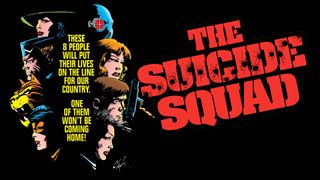
Three decades ago in the D.C. comic book series Legends, readers were introduced to a government official named Amanda Waller, a.k.a. 'The Wall.' The Wall had a be after to deal with problems that needed to stay on out of the in the public eye optic and that regular superheroes wouldn't touch: Transport supervillains in to do the dirty work, in exchange for time away their sentences.
Outfitted with explosive collars to prevent betrayal and guided aside such equally-broken-down government employees as Twist Flag, this sundry crew became the headliners of Suicide Squad, a book unlike anything regular readers of the DC World were utilised to seeing at the fourth dimension.
Missions were tinged with real-world countries and politics - and rarely ended with a trim victory. Previously minor characters, ranging from Deadshot to Bronzy Tiger and even Maitre d'hotel Boomerang, were fleshed unconscious with convoluted personalities and a self-destructive edge. The Squad lived equal to the expendable quality of its name - characters died frequently, and they were oft the ones who seemed the all but heroic and/or competent. And the moral and ethical quandaries the Squad's mere existence posed hovered over the proceedings, with everyone from the government to other heroes doing everything from trying to manipulate the Squad's missions to getting them shut down for good.
On August 5, the Squad returns to theaters with a tone from writer/director James Gunn that is even more loyal to the original formula of the Suicide Squad comic books.
Newsarama assembled our own Squad-of-sorts in the form of the creators responsible for the versions some of the characters you'll see on screen for a special oral history of the Suicide Squad.
In this retrospective, the creators reminisce about how the book came about, the origins of the characters, and much, much more.
Secret Origins of the Self-destruction Squad
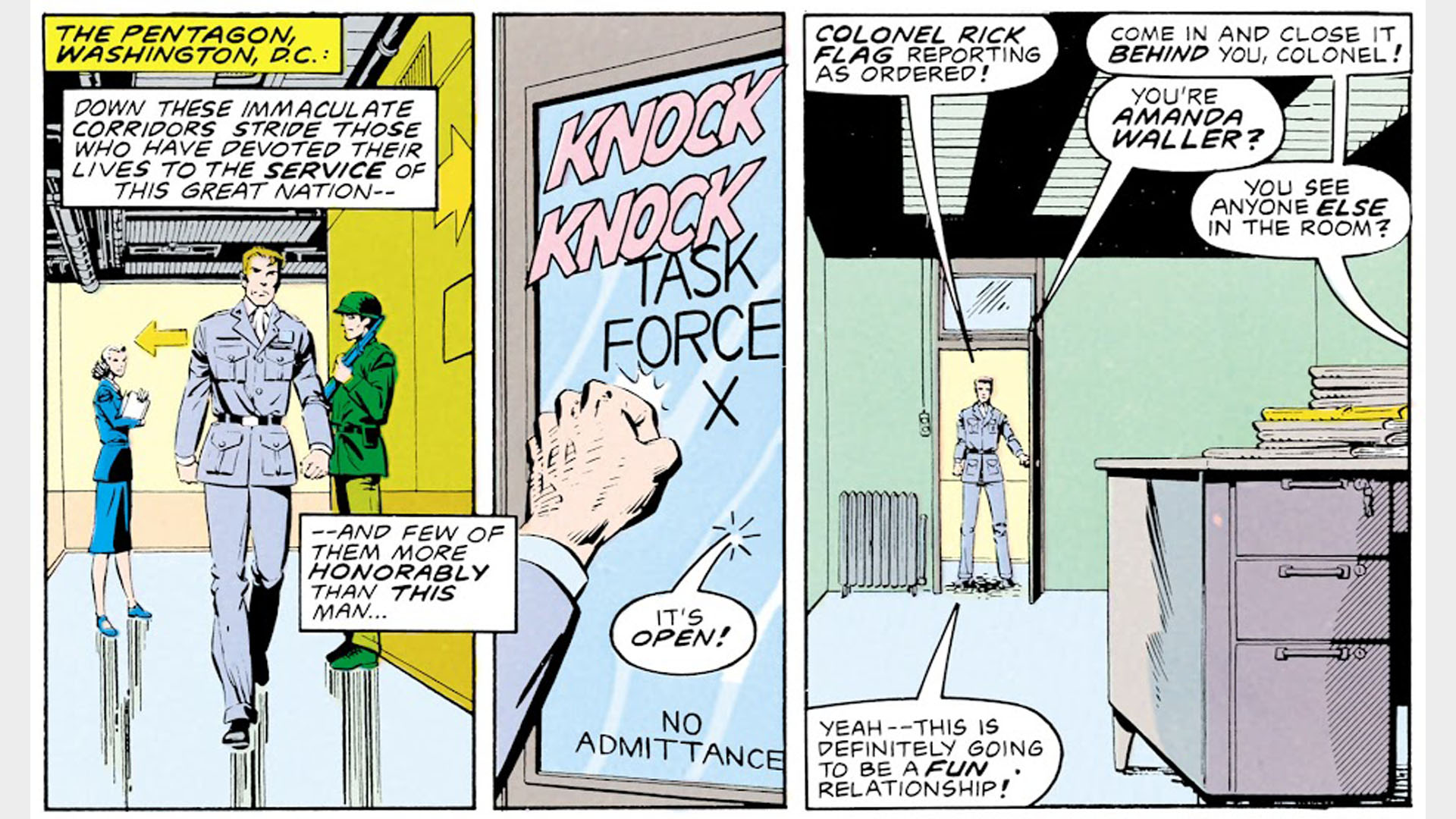
Mike Gold (editor, Legends): This series started arsenic a discussion between John Ostrander and Cork Greenberger, although John wasn't writing for DC as of yet. I think it might have been Dock who suggested reviving the name 'Suicide Squad.'
Robert Greenberger (editor, briny Suicide Team series): Saint John Ostrander and I had met As victimize road warriors and I was already a fan of his First Comics work thus IT was natural we'd want to work together. He first pitched Challengers of the Unknown, but Hawkshaw Giordano, our executive editor, said it was already secure.
Around that time, Legal would circulate a list of titles that needed to be used or DC might lose the trademark, and 'Self-annihilation Squad' was on the listing.
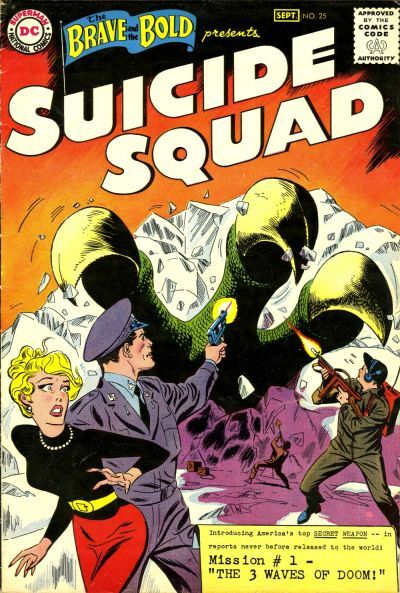
Gold: That form of address - like several other '50s launches (Risk Tag, The Dauntless and the Overreaching) - 'Suicide Squad' originally was used as the title for a pulp series.
Greenberger: While non a big fan of the Kanigher-Andru-Esposito stories from The Brave and the Temerarious, I found something catchy astir the name. I inclined it to John; he wasn't biting at the start but the more helium view near information technology, the warmer he grew.
John Ostrander (author/creator, Suicide Squad series): Ab initio, I view the premise was extraordinary. Then Irangate came about, and suddenly the concept of the Squad seemed much less far-fetched.
Gold: When I socialist First Comics to fare over as DC's senior editor - later grouping editor and conductor of editorial development - it was with the understanding that I could bring over many of the folks I enjoyed impermanent with at First. John was my initial choice, and when Dick Giordano asked Maine to develop the sequel issue to Crisis on Infinite Earths (while I was unruffled in Chicago and isolated from the NYC faculty; this was Dick's idea). Can was my select for plotter.
Bob Greenberger was assigned as my assistant editor, which was groovy as he was a friend whose professional work I respected. John told Maine about his discussions with Bob and, since my chief intent for the Legends mini-series was to use it arsenic the launching pad for a number of new projects (such as the Wally West Flash and the Justice Conference) I thought Self-destruction Squad was a great idea to add.
John developed the story as well A the character of Amanda Fats Waller in Legends, evidently, to great effect.
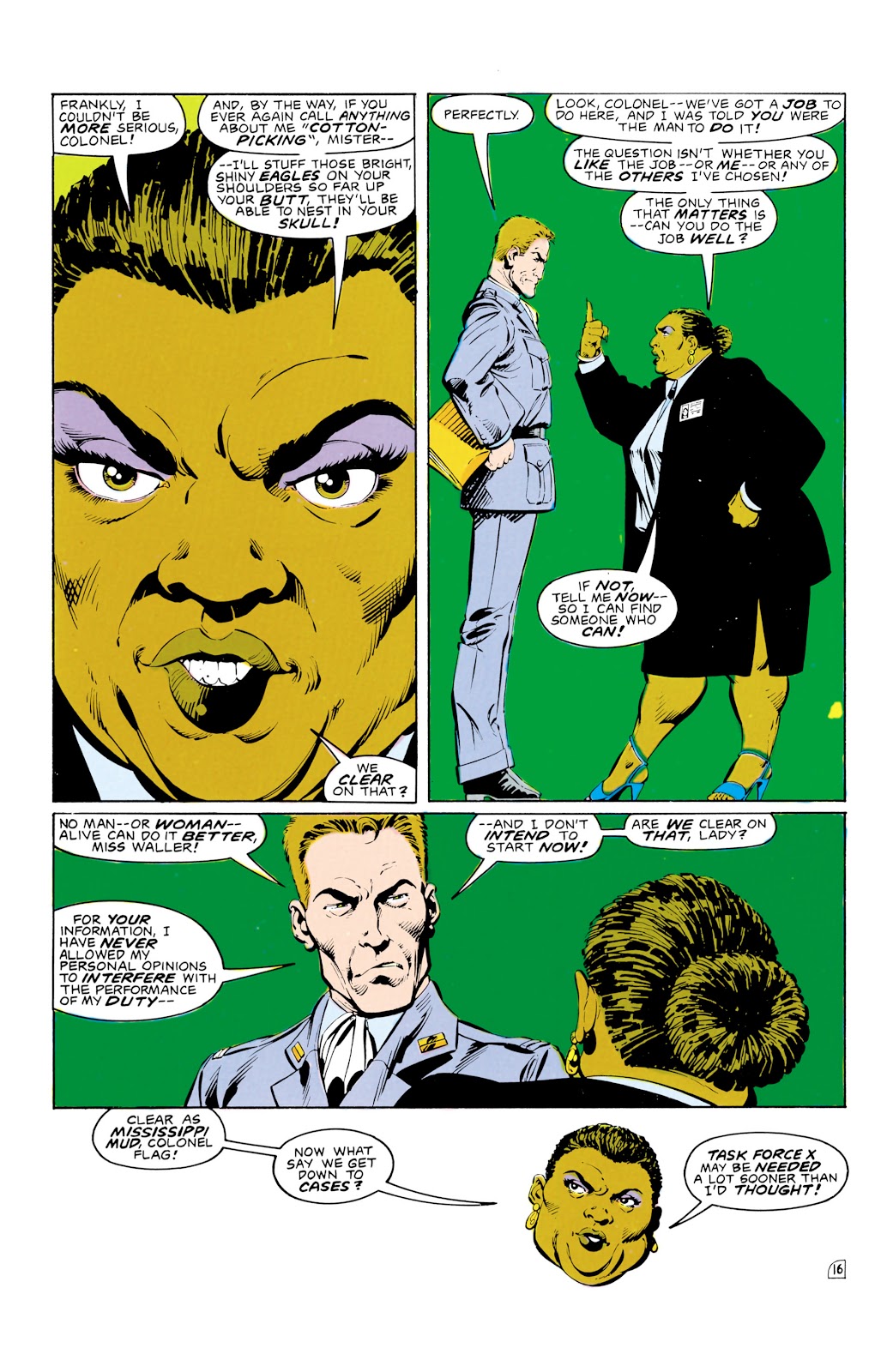
Ostrander: I relieve stick some residuals for creating Amanda Waller. Many of the other characters already existed.
Greenberger: John was in Boodle, and this was the mid-'80s, thusly email was a ways forth. So we spent a lot of metre on the phone. We talked themes and story concepts. I poured finished Who's World Health Organization in an effort to find characters we could use, peculiarly cannon fodder, but also recognizable ones no 1 craved to use at the time.
Ostrander: The Flash had just been rebooted in Legends, and they weren't interested in victimisation his rogues gallery, but we didn't really kill some of them dispatch, though we used Captain Boomerang and later Captain Cold. I was committal to writing Firestorm's book, and then yeah, I had free rein on killing off Firestorm villains.
Greenberger: I straight off fast on to John's idea for a full supporting cast working at Belle Reve, which gave us characters we could own and work with sesquipedalian-term.
Ostrander: Belle Reve was a concept I was same pleased, because at that point there was no specific prison house in the DC Population for belongings metahumans.
Luke McDonnell (artist, Suicide Squad independent series and Deadshot limited serial publication): Designing Belle Reve was a lot of fun. I got to create a prison house!
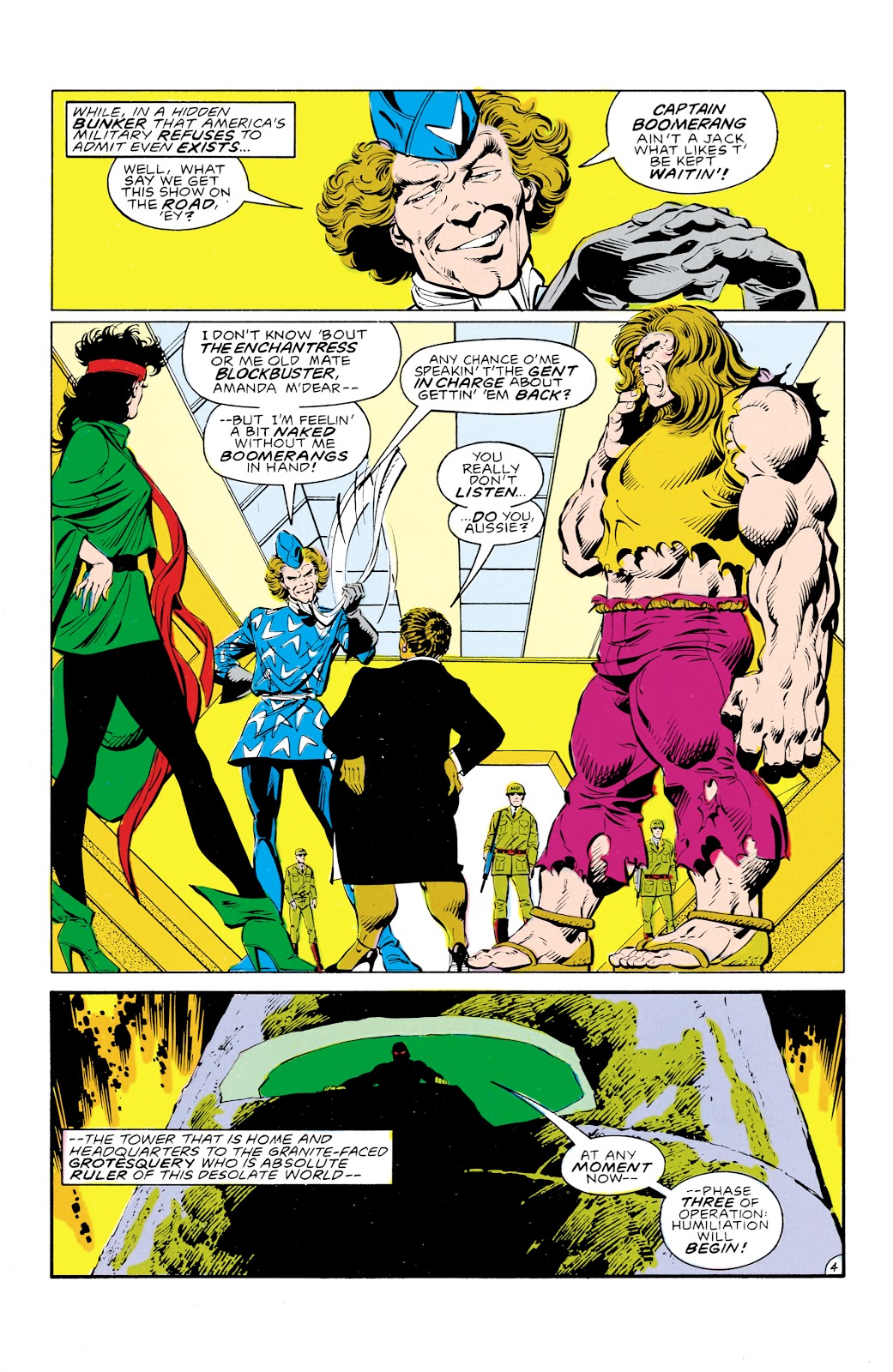
Greenberger: Afte, once Luke McDonnell and Karl Kesel were brought connected plank, we arranged conference calls and meetings at cons where practical.
Karl Kesel (inker, main Suicide Squad series): I'd been inking the Legends mini-series, which introduced the Suicide Squad. Remember, this is stake when the inscription was actually on the art, so I got to read the drama book as I inked information technology.
As pages came in and I realized what John Ostrander was doing - the Begrime Dozen with tops-villains - right away I cerebration 'This is genius!' Very soon after that, I started to lobby editor Bob Greenberger to let me ink the Team's monthly title. Gospel of Luke was already onboard arsenic penciler. I finally wore Tail down and He gave me the gig - probably just to get me unstylish of his whiske!
Greenberger: Luke was more curt, eager to take in new settings and characters.
Ostrander: With Luke, I wrote the book Marvel-elan because he was and then moral at breaking down scenes into little moments – giving them this cinematic quality. I wanted to write around that.
McDonnell: Lav's scripts were through Marvel-flair – there'd make up this real, very detailed diagram, and I'd break information technology down into pages and panels, and then atomic number 2'd go back and dialogue information technology. Information technology made for a very close collaboration.
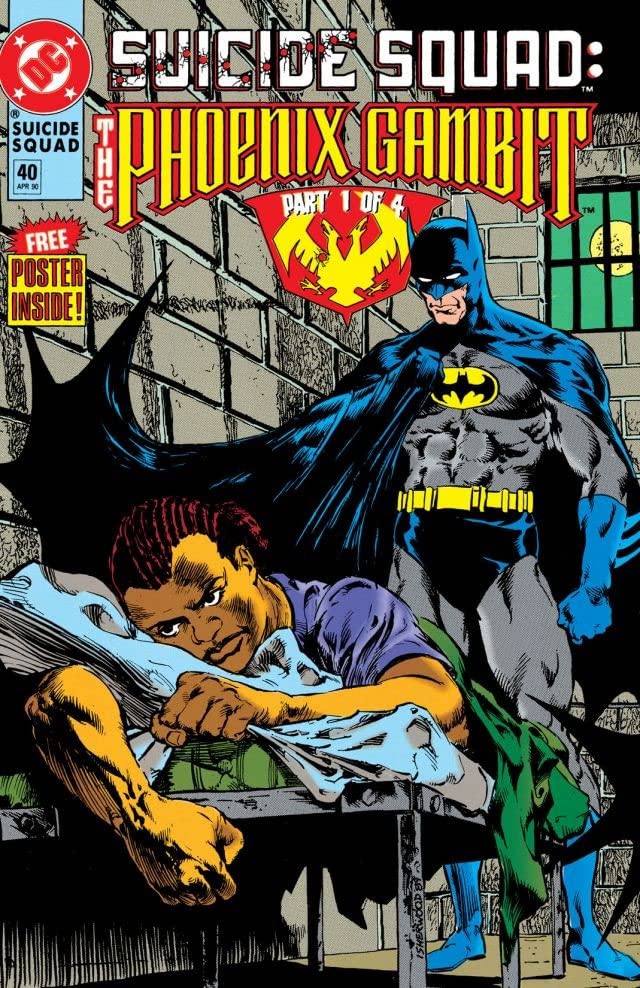
Geof Isherwood (creative person, second half of main Suicide Squad series): John - and Kim Yale, I must include - wrote very seaworthy, very well-constructed scripts. Drawing at Wonder, I was used to the diagram method, and totally unsurprising to adapt that plot synopsis into storytelling and pages. What I immediately comprehended from the full scripts was intentional the dialog, so matching acting and expressions to what the characters were saying was much easier to do. And, given that they cerebration out their stories quite thoroughly, I seldom felt the need to vary from that playscript for the sake of clearer storytelling.
Kesel: The affair I enjoyed nigh, without a doubt, was how cooperative John wanted the litigate to embody. He said He saw us as a striation, and we were every trying to make the best music possible, so still that happened was cool with him.
We each had our role to play - John on lead guitar, Luke on keyboards, I guess maybe I was drums - merely we could all suggest things to the others. Whatever made the crop better. That was one of the best lessons I ever erudite in this industry and, quite honestly, it's something I do to this day on any project I make on myself.
I took full - and in all probability unfair - advantage of this crack-in-the-threshold and started sending John long, handwriting-graphical letters occupied with ideas about the Squad. Yearn letters. I believe his wife Kim called them 'Kesel Epistles.'
John was unfailingly gracious - never complained, ne'er told me to go jump in a lake - and actually integrated a number of my suggestions into the book. To my great joy.
Ostrander: The briefing scenes came about because I hadn't done a team book before. In the storylines, the squad was often split into several groups of smaller characters, and this was an opportunity to not lonesome institute what the story was about, but to have them tired one place and let them bounce off each former. It was inspired by TV shows like Hill Street Blues, which was popular at the sentence.
Kesel: John's writing was thrilling. Very exciting, very intense. Too: rattling funny. He constantly - constantly - took B-, C-, and D-level characters and didn't just make them interesting, he successful them memorable.
Greenberger: The book worked because in 1987 there were just a few team books at each accompany, and they were completely heroes.
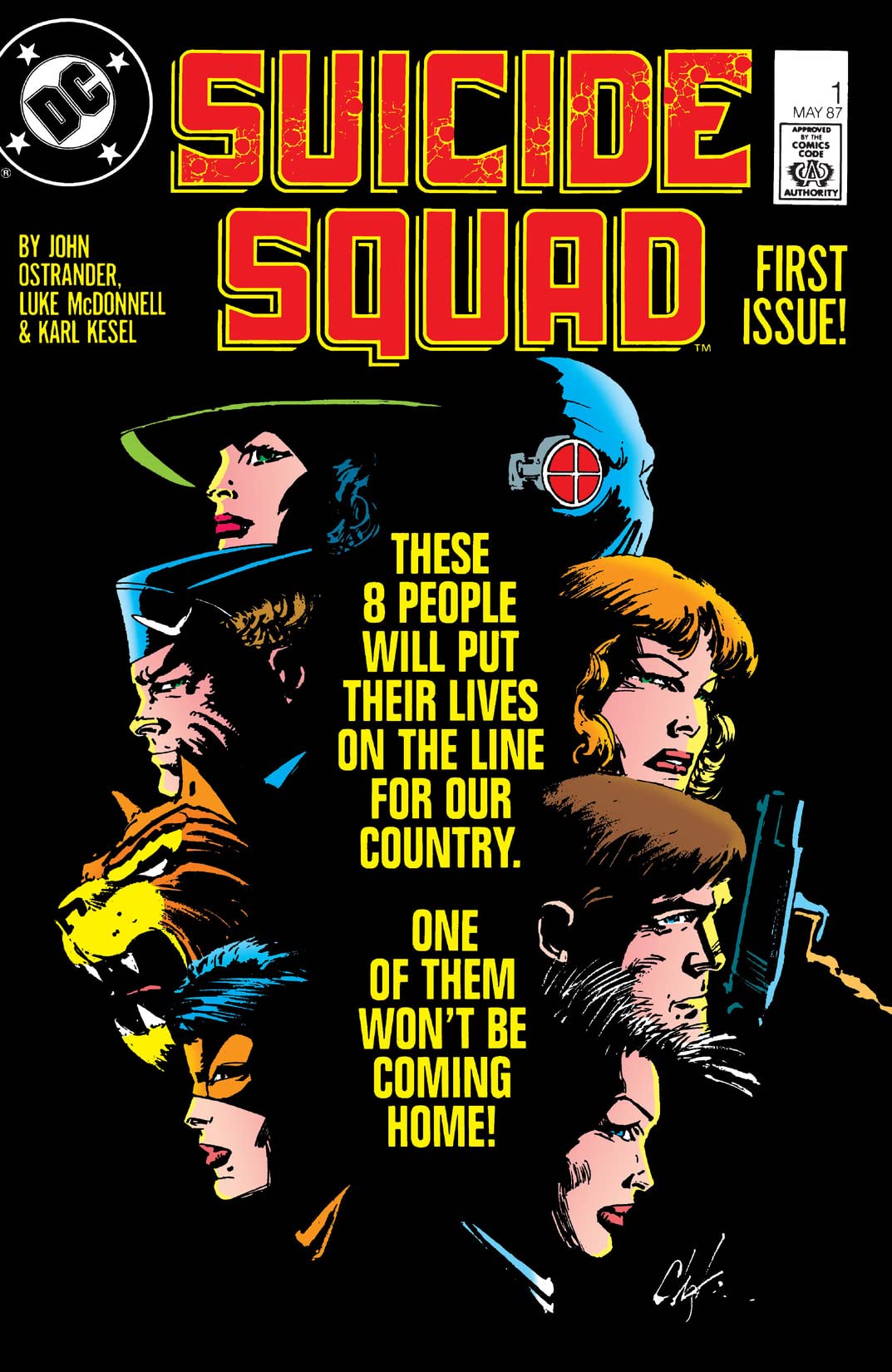
Adam Glass: (writer, 'New 52' Suicide Squad): I use to get my comic books from this candy store in the Bronx and I remember seeing that impressive Suicide Squad #1 back by Howard Chaykin.
And it was this avid picture of all these bad guys, I've seen most of them in front, simply a a couple of I hadn't. Then it says: "These 8 multitude will put their lives on the line for our res publica. One of them South Korean won't be orgasm backbone!" And I was in. Bad guys? Someone's going to die? Where do I sign ahead?
Ostrander: We ripped a muckle of our plots from the headlines. The first issue of Self-destruction Team opens with what appears to be terrorists fetching outer an airport full of people. I'm non predestined they'd allow USA do a story like that today. We e'er tried to celebrate one substructure grounded in the real world.
The Wall
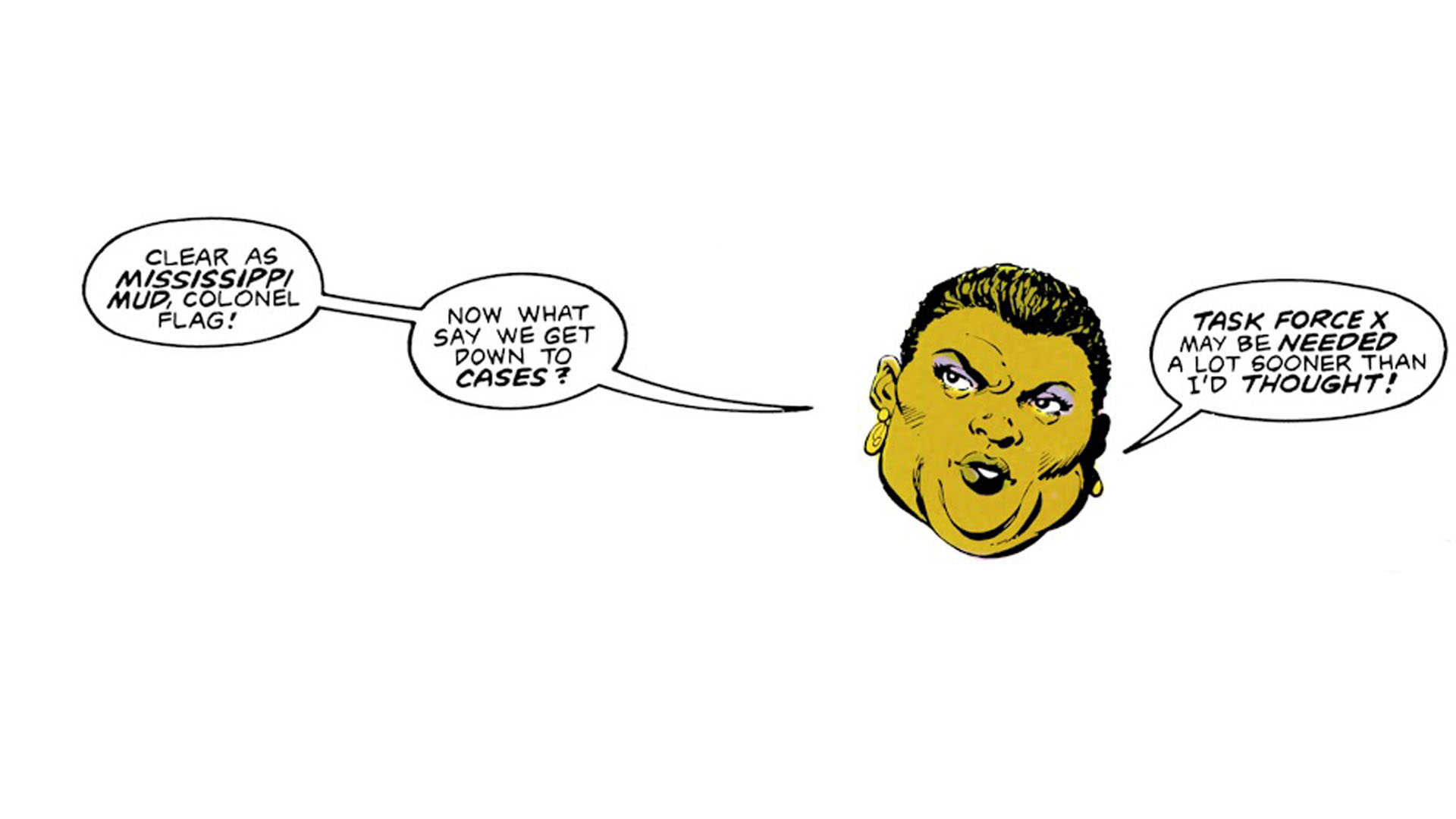
Gold: It was Amanda Waller that made the series unique. John created Amanda out of whole cloth, basing a few of her nuances happening people he knew in Chicago.
Chalk: Amanda Waller 'The Palisade' was a badass. She would contract on Batman and call him "rich boy." She knew his secrets and Lashkar-e-Taiba him know it. Evening Superman was scared of Batman, but not the Surround. Black, female, looked like your aunt, come on, you weren't seeing that anywhere other but Self-annihilation Squad.
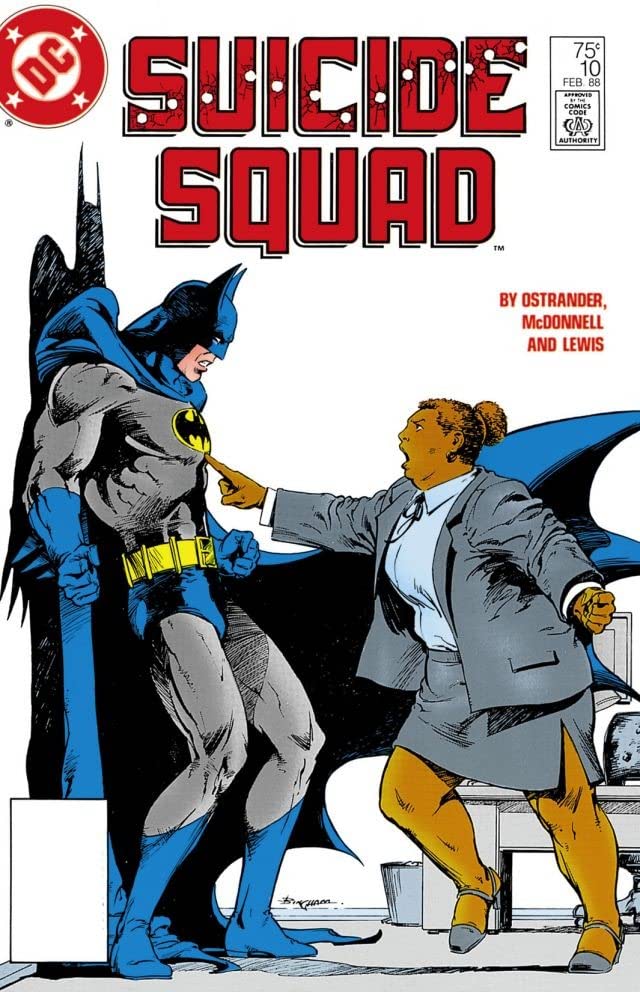
A favorite moment – Suicide Squad #10. Batman, disguised As Matches Edmond Malone, sneaks into Belle Reve to bargain some info and has it out with Fats Waller, who gets the better of him.
Au: Debut Amanda (in Legends) was wonderful and great fun - observation the reaction was big fun. When I got in the back seat, watching Amanda lease connected Batman was just a joy.
Ostrander: Amanda Waller was truly same a wall, the way Gospel According to Luke Drew her - I loved what he brought to the character. When we got to enter her background, we saw the way something like that forged you. She was pragmatic, refined and bladelike.
Kesel: The Wall is one of the best characters introduced in comics in the last 30 years. Wholly unique. I haven't kept up with all her incarnations, but I flavor very powerfully that if she isn't an overweight black woman - which instantly makes her someone World Health Organization is both underestimate and extremely intimidating - a lot of the point of the character's been missed.
Deadshot
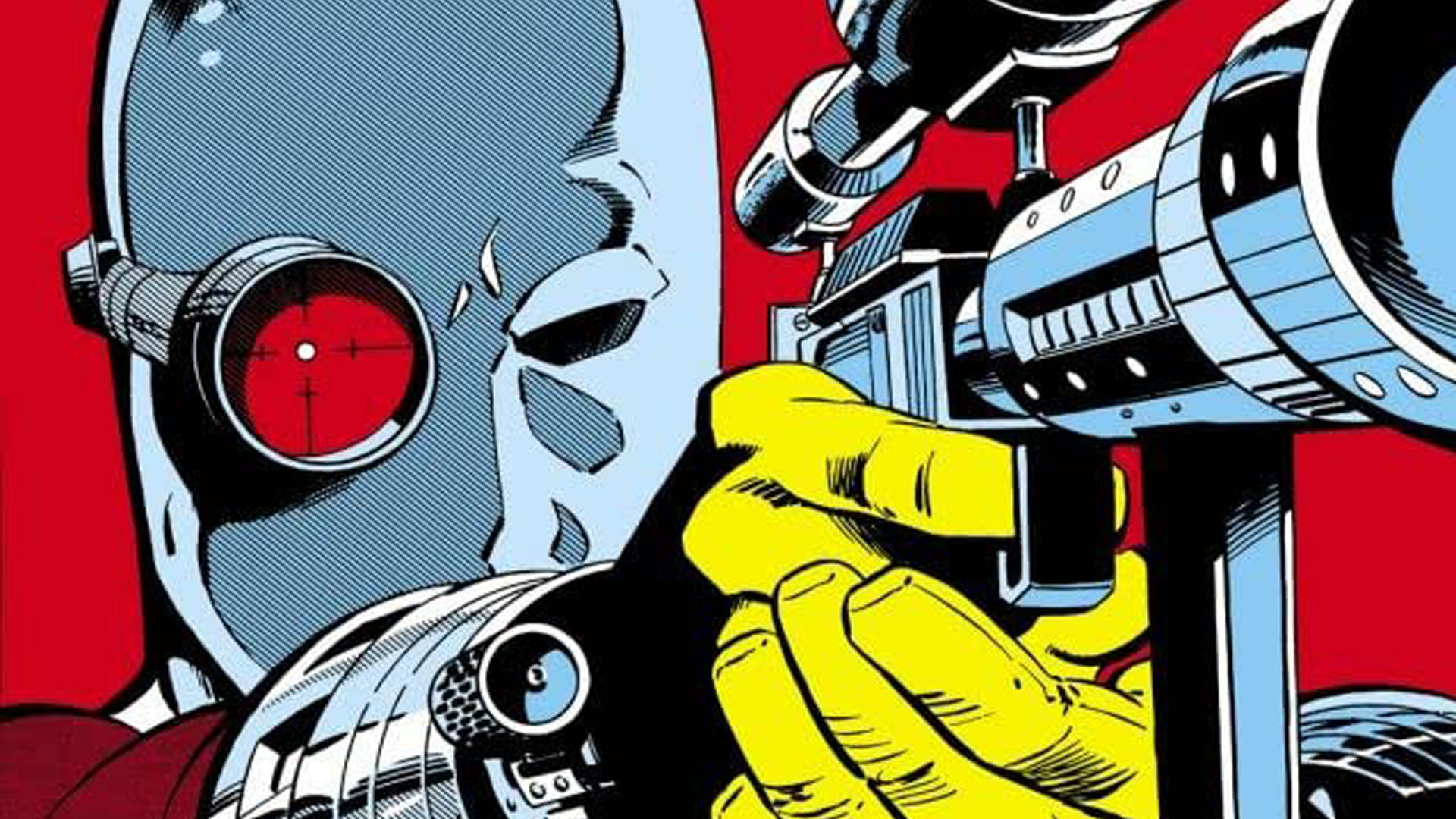
Kesel: Deadshot was, course, the book's break-out character. And a favorite of mine likewise.
Ostrander: Deadshot was a character they'd introduced in the '50s, and and so didn't reintroduce him until the '70s, with this brilliant costume design by Marshall Rogers. And then they didn't do much with him after that, except appear in Batman anniversary issues.
I based his personation on an audience I'd seen along Telly with a hitman - honorable this glacial, emotionless, prosaic person. He said helium didn't rate his life, wherefore should He prize yours?
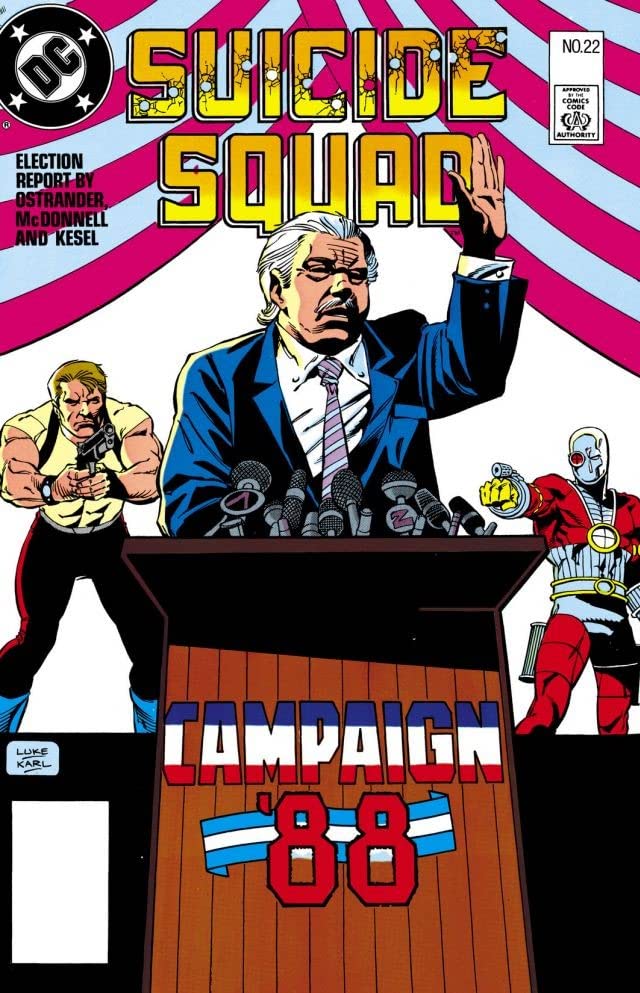
Kesel: Self-annihilation Squad #22 - when Deadshot shoots the Senator who's blackmailing the Squad - is still, to this day, the one humourous I'm most proud to hold worked on. I still have all the original prowess from the story's coming, and it's ne'er leaving my custody.
Ostrander: That moment, where Deadshot shoots Senator Cray so Flag won't - that was a defining moment, for that fiber and for the Squad.
Kesel: In the moment Deadshot shoots the Senator, he is the history's hero and villain - something I've never seen in comics before or since. I'm very proud to have been a small part of that.
Simply.
That storyline was in John's original lineation for the Squad - and in that outline Deadshot died in the acclaim of bullets succeeding the Senator's death. And I stock-still think he should have died.
Yes, that would have disadvantaged us of a great character, but it's the one time I saw John's fondness for a character soften what he did to the part. On the one hand, yeah - I'm glad Deadshot is still roughly. John ready-made him into a expectant character! But - that would have a been such a great end.

Greenberger: Killing Deadshot would have been a ballsy move, but the Squash racket-office liked what we were doing with him, and felt there was a place for him down the road. In addition, we were free to do the miniseries, and killing him didn't fit those plans.
Ostrander: The Deadshot miniseries LET us go into the psychology of the persona. Floyd idealised his brother, and in trying to 'save' him, Floyd accidentally kills him, and that put across Floyd down this path. It was dark, but you know, if you read noir, you know you have to go clear. The roll of characters in this miniseries was so twisted that Deadshot came out looking pretty advantageously.
McDonnell: The Deadshot miniseries, that was the initiatory time I got to ink my own stuff. Information technology's roughly of my favorite body of work.
Ostrander: It was my dearie collaboration with Luke. The end of issue #3, where Deadshot tortures and kills the world who killed his son, and slowly pulls soured his mask, and the endmost foliate is this squish-pageboy close-up of him screaming "I'm advent home, Ma!"– that's ane of my favorite sequences ever.
Police captain Throwing stick
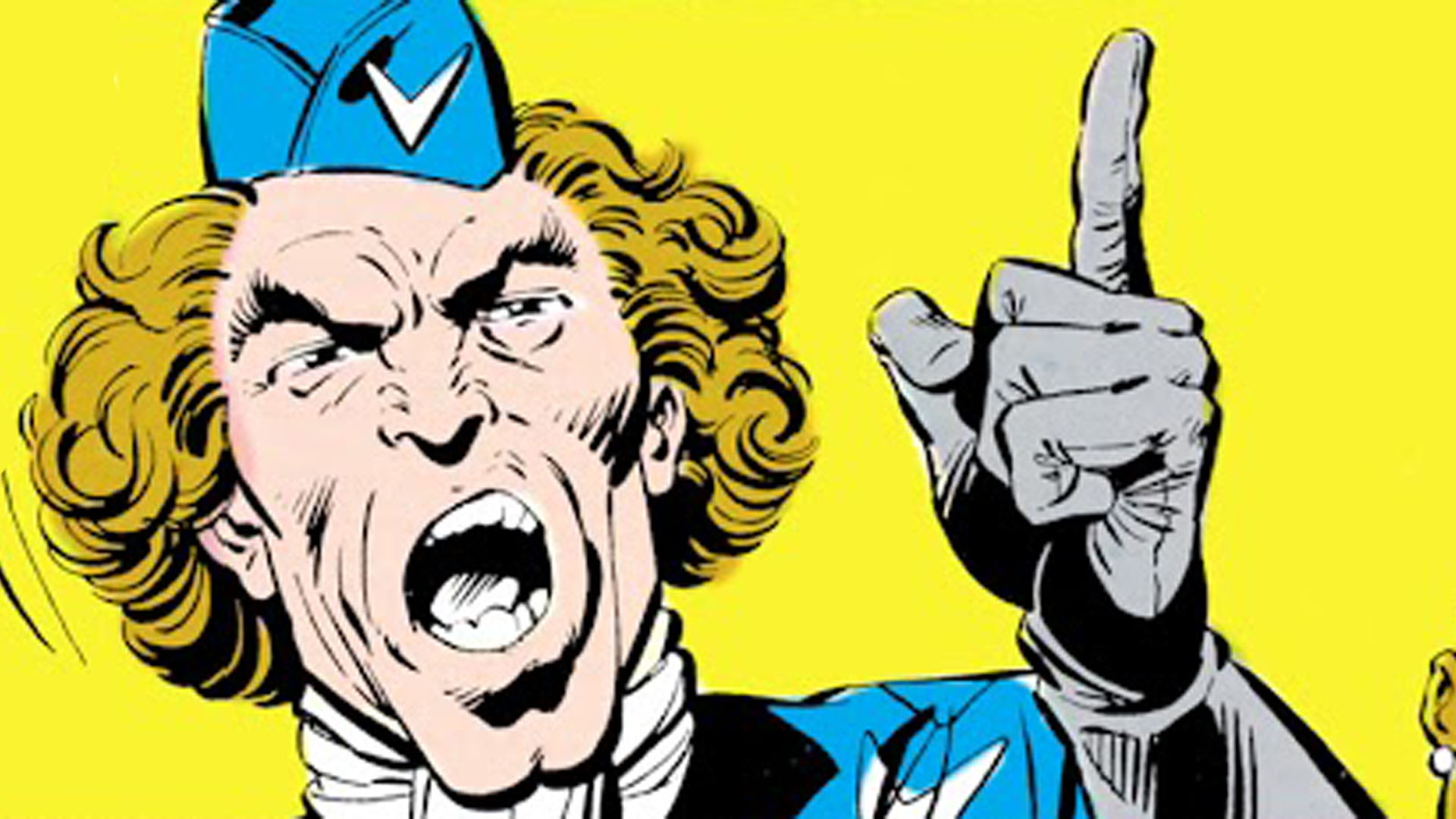
Kesel: If you had told ME a year earlier that I'd like Headwaiter Boomerang -that He'd be one of my favorite characters and I'd be pushing for a one-scene starring him - I would have laughed in your face. And yet... that's the magic of John's writing.
Ostrander: Captain Boomerang was so such entertaining, because American Samoa low as you thought he could sink, he'd retrieve another level to sink. Of everyone on the Team, he's the only i World Health Organization's homy with who he is.
One of my favorite issues with Luke is the ace where he's been impersonating Mirror Master to commit crimes while not on Team duty, and he has to keep going back and off, ever-changing costumes, like an old stuff.
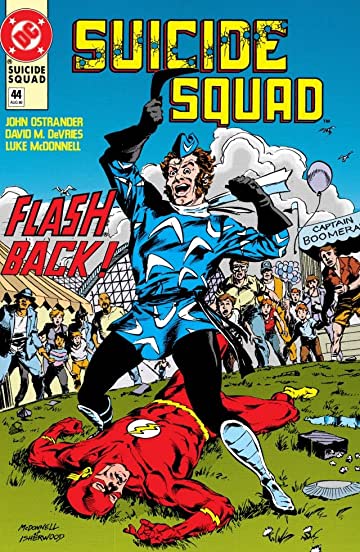
Kesel: The thing I likable most near John's Throw stick was that He had a real personality! Helium was an unrepentant sociopath who was constantly gambling the system of rules. He was, as they tell, clearly the star of his own, central movie. When Waller tells everyone on the Team that they're spendable, you know Boomerang looked approximately and persuasion 'Yea, right hand. They certainly are.' But he never thought that practical to him.
I idolised that he did the bare nominal to remain the Team. He for sure wasn't someone I'd trust. But Whoremonger gave him an easygoing charm that made him sufferable, otherwise I'm sure Deadshot or someone else would have set him out of their misery astir ii issues into the series! Atomic number 2's the kind of eccentric who's great to watch from a distance, only you would absolutely hate in really life.
I pushed and pushed for a one-shot with the graphic symbol - which, at one point, was supposed to represent inscribed by Gospel According to John, ordered-out by Keith Giffen, with me supplying finished art; I even roughed out a logo! It didn't happen, but it would take over been sweet…
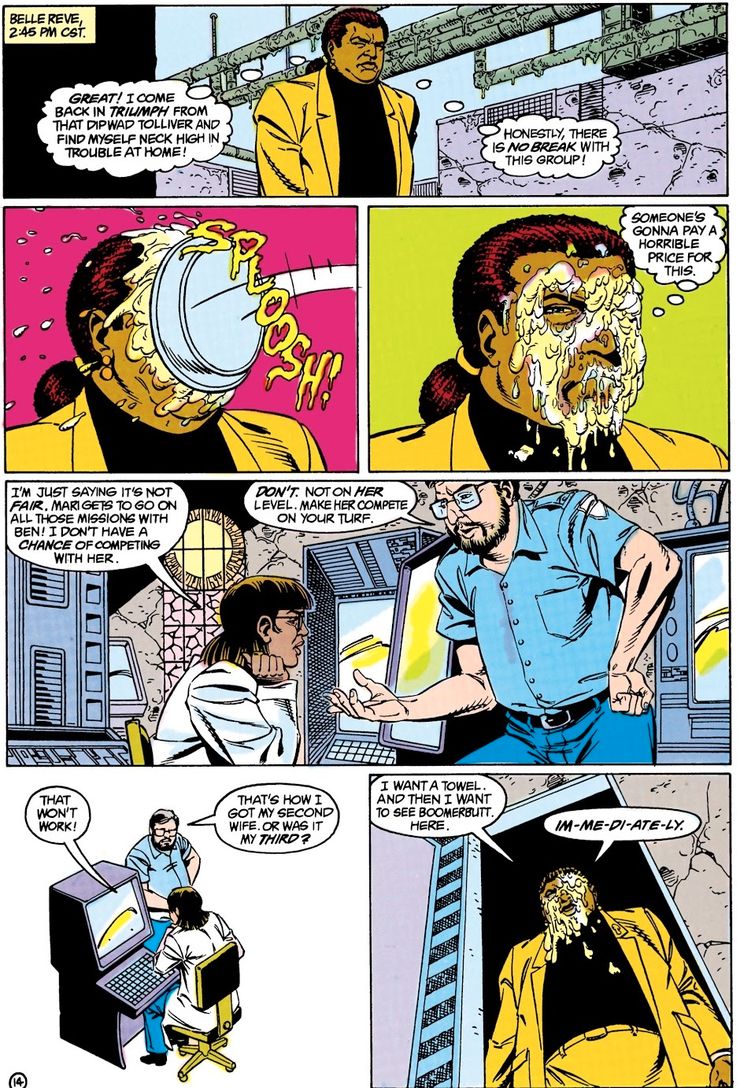
Greenberger: We got to make Captain Boomerang a real corrupt villain, front with masquerading arsenic Mirror Master to keep off Fats Waller, and so the whole pie heave.
Ostrander: The pie in the face gag - we stretched that out for two long time.
Kesel: Comical story: I wanted to do an arc in Superboy guest-starring the Team, and I ran into a lot of immunity. The Squad's possess ledger had just been canceled, and the thinking was: sales clearly indicate there's no interest in these characters. Why use them? But I love the Squad, stood my ground, and did the triad-part 'Diluted Grave' tarradiddle. (The first clip King Shark worked with the Squad, I'll point out).
I said it wasn't the Squad without Waller, Deadshot, and Boomerang - and those are the only characters I was cleared to use. Everyone other came from the Superboy book. Which was fine with me - it's still one of my preferent Superboy stories.
There was lecture at the time about killing Backfire in one of the big events that was being premeditated - none idea which - and I begged them to let me kill him in my Superboy story or else. If he was going to die, I treasured him to be killed by someone who loved him. In the end, they only LET me maim him - I had Deadshot shoot him in both hands. Backside't remember what happened with Boomerang after that - he's dead now? Replaced aside his son or something, far?
DC's always had trouble with older characters - feels the fans can't relate to them.
The thing with Boomerang is - yes, he was older, he was balding- only that was part of the point. He was an old dog who couldn't learn new tricks! Non only couldn't - didn't want to! And the fact that he was older proved atomic number 2 was full at what he did. It worked for him. Atomic number 2 was a survivor! None of that comes finished a younger character. Oh, symptomless...
The body count
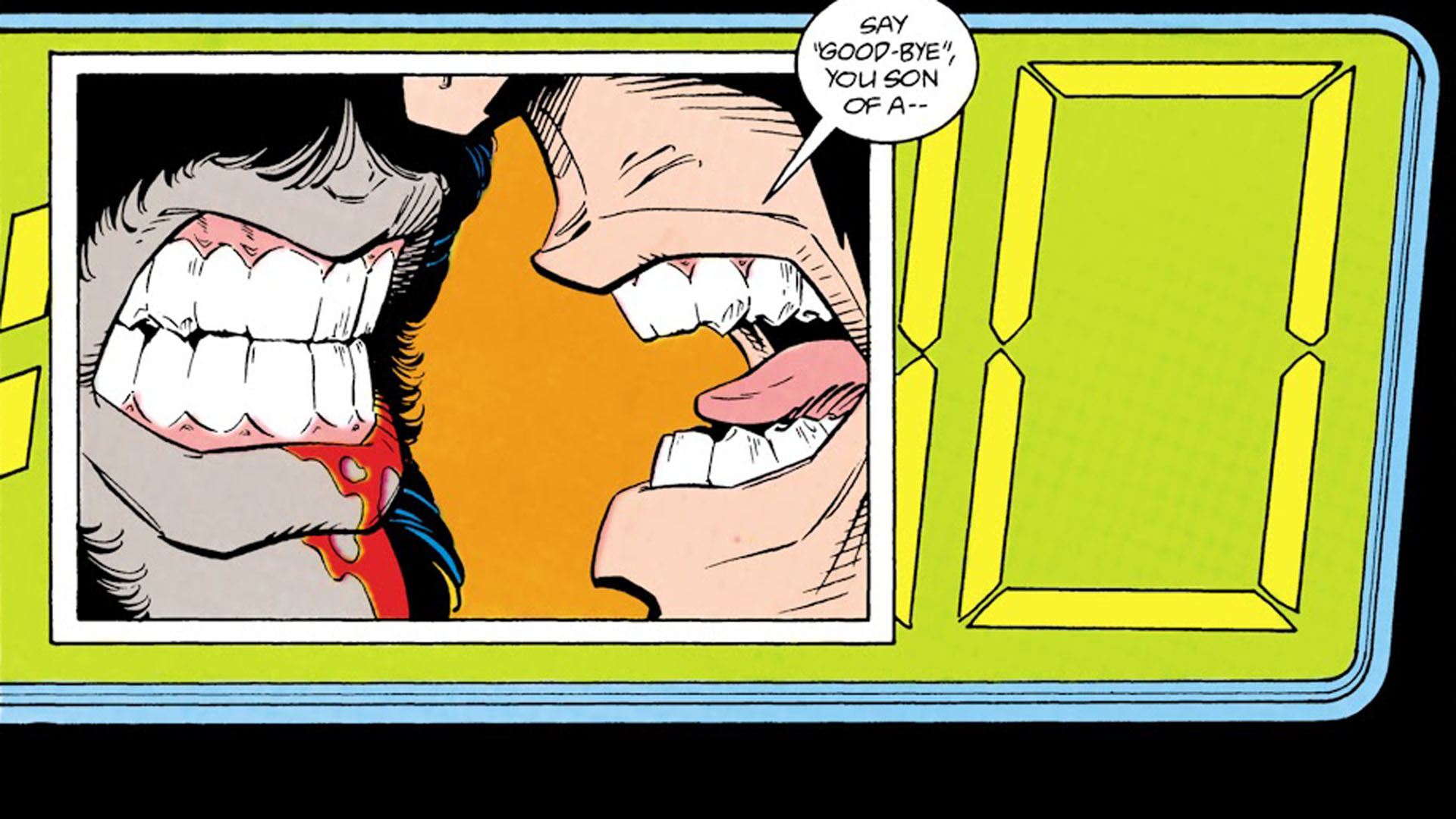
Ostrander: You never knew WHO we were releas to kill.
The challenge was establishing characters within such a short space. Shrike was an interesting lesson. She has these funny/horrifying moments speech Father Craemer, and you watch she's been abused and has this tragic ingredient to her backstory, and then she's killed off, all in one issue.
No one was a redshirt…okay, Grant Morrison was, I'll cop to that. The thought was they'd engrossed themself into the continuity when they appeared in Animal Man, and so I killed them off to set them free.
The important thing with Rick Masthead's dying was the readers knew, 'If they can exterminate Kink Flag, they privy exterminate anybody.' It raised the stakes for everyone.
We made IT look like Amanda was killed at united point – she was shot at least once, but I was never releas to toss off Amanda, any more than I was ever going to kill Backfire or Deadshot. I was having too untold fun with them.
Fair-minded before Crick Flagstone went come out of the closet happening his unalterable vendetta, we did a crossover special with the Designate Patrol, and Rick had a separate team for that one…and we killed them all off! Rick was the only one who walked out alive along that united. IT was the Squad taken to the nth degree.
Greenberger: I father't come back arguing against anyone's death, although it took some editorial arm twisting to have me use extraordinary of the bigger-name villains much as the Penguin. Once we took forth and got some ecla, that became easier.
Personal Favorites
Greenberger: Karl would draft his long, enthusiastic letters, which we called 'Kesel Epistles'.
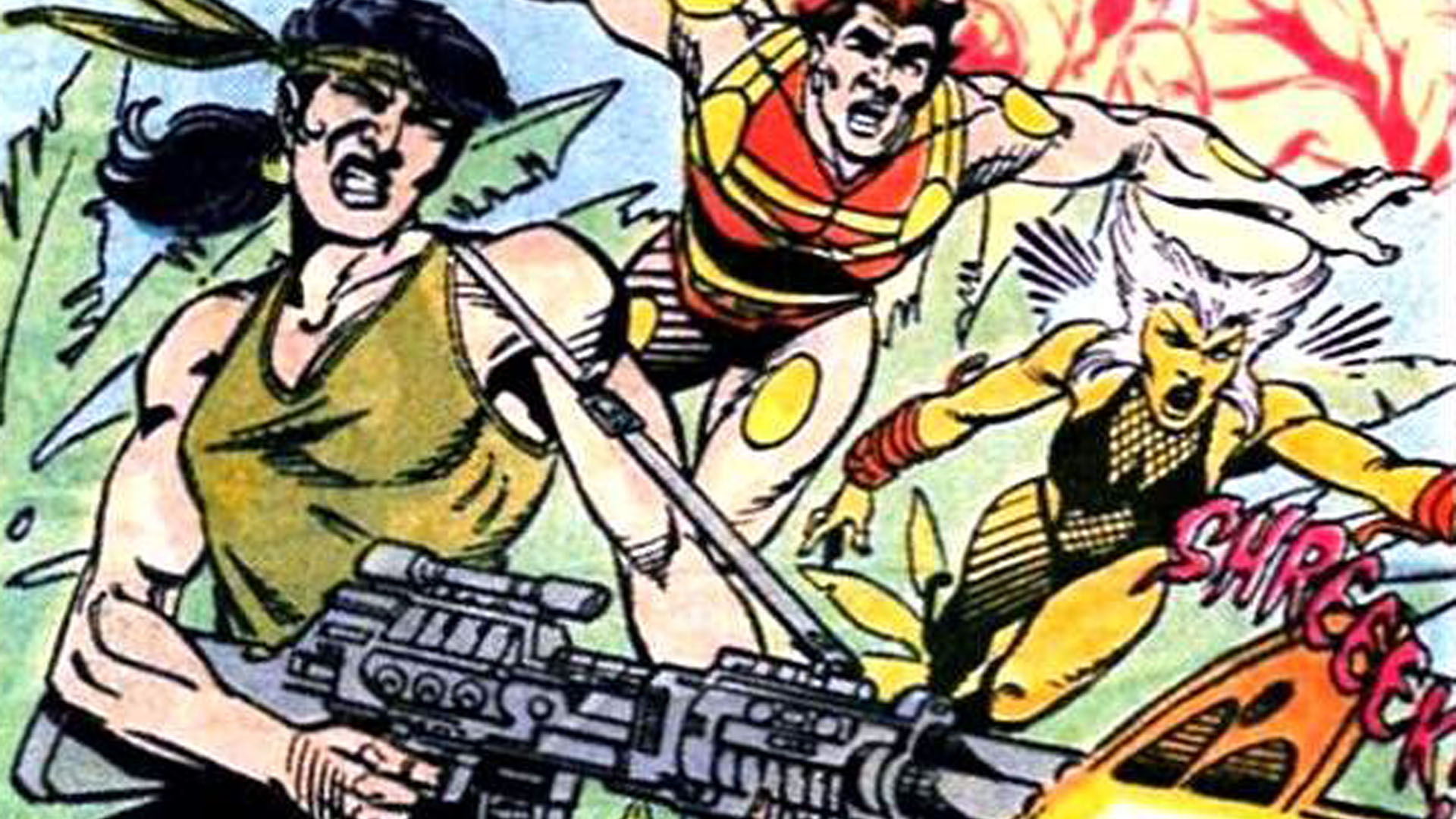
Kesel: The biggest uncomparable (they old) was probably that the Female Fury Lashina should lose her memory and join the Team low some other identity. I didn't have a gens, just that she should have a Truly Big Gun. (I suggested this right after eyesight the movie Aliens. Go fles.) John took the idea, named the character 'Duchess,' and made the character much more than just a fan-son heist.
Greenberger: All credit to Karl for pushing us to use the Female Furies and the intact Duchess subplot which took two eld to earnings dispatch. That was a particular favorite.
Ostrander: Lashina gets stuck on Earth, so she adopts another indistinguishability so she sack survive and obtain her way spine to Apokalips and learn retaliation on Bernadeth, World Health Organization got her stranded there.
The thing with Darkseid is he has this carnal power, but what's greater is his Machiavellian mind. He can punch you through a wall, just expiration back to Jack Kirby, helium can outthink, outplan you.
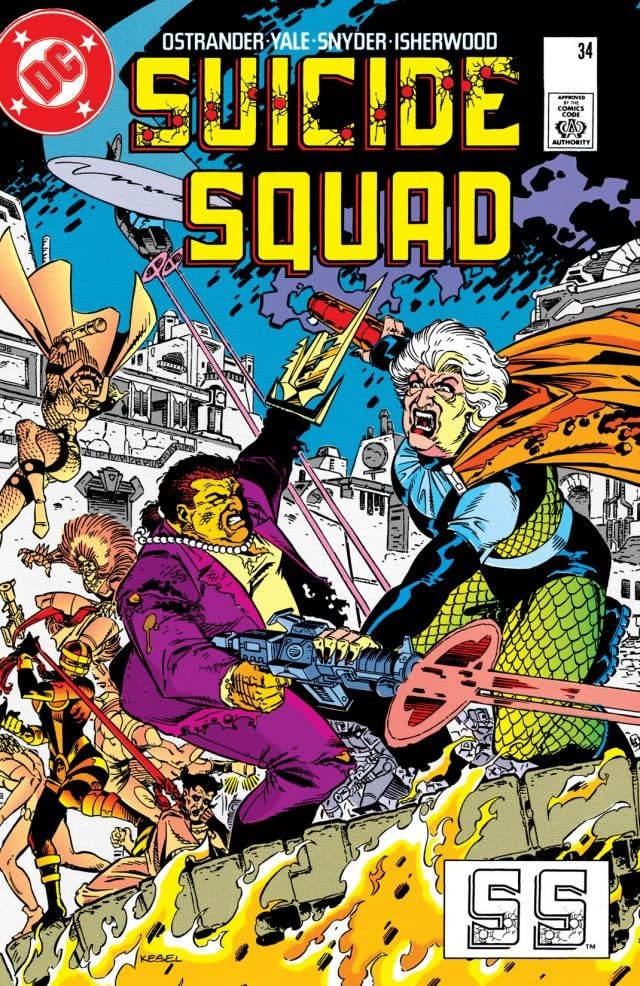
McDonnell: Drawing the Kirby stuff was great - I always wanted to do poppycock like that. Kirby was a major influence of mine, so getting to hooking those characters was invigorating.
Ostrander: Looking back, I wondered, 'Was that even off feasible, Amanda Waller standing up to Granny knot Goodness?' But it was amusing, and we got to do it in a room that didn't take Grandma a little character.
Isherwood: I knew Barbara Gordon had been Batgirl, so I drew her accordingly, personality-wise.
Kesel: Punch and Jewelee. Another set of characters who I never-in-a-million-days thought I'd have any interest in. Yet John made them twistedly memorable. I liked them so much I begged to do their Who's Who page -and to this day it's a spell I'm proud of. (There was discourse a Punch and Jewelee one-shot atomic number 3 well, with me on art and John the Evangelist and his married woman Kim on story. I'm sure that would have been horrible, rattling fun.)
Glass: I loved Bronze Tiger. In that respect were not a fortune of Continent-American characters in funny books when I was growing functioning. Soh, to see a divers fictitious character who happened to be a kung fu masters, with a mysterious background, and a strong moral code was refreshing and assuredness as hell. And you were serendipitous to see one different case in a comic book, simply Suicide Team had two, with him and Amanda Waller.
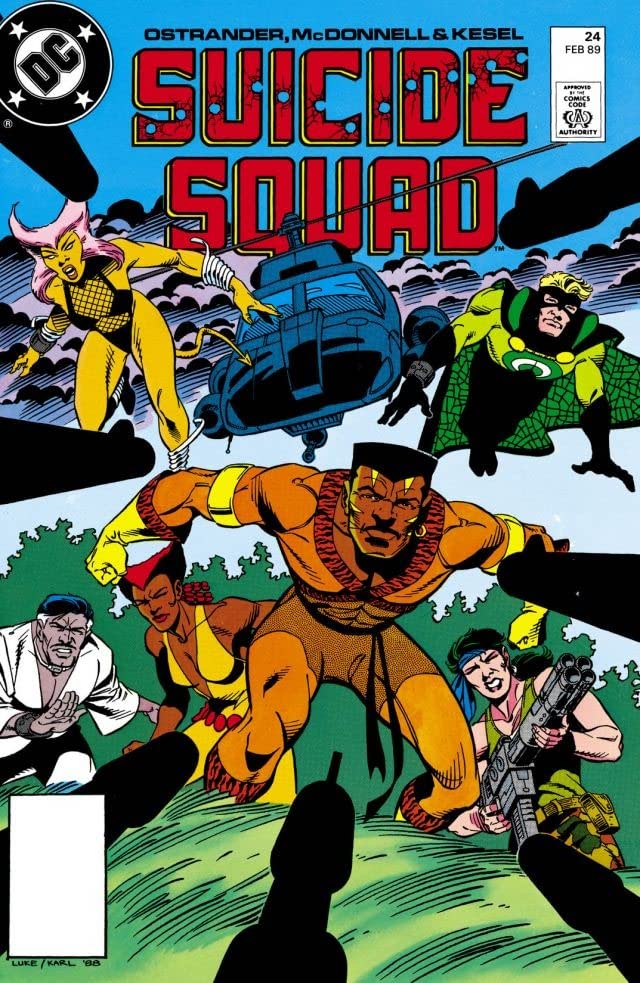
Ostrander: I forever likeable Shadowiness the Changing Man – we were given license to but consumption him temporarily, with the knowledge he was departure to make off in his own mature readers book, and we wouldn't cost able to use him.
What I wanted to play with regarding the Penguin is that sometimes he's very silly-superficial and silly-acting, merely to lowest as yearlong as he has, He's got to exist a criminal mastermind. So we took him out of his convention element, his outfits, the umbrellas –he had to depend on that mind of his. And I aroused getting to do more with that in Penguin: Triumphant a few old age later, and they used that characterization for years afterward, on that point are elements of it in Gotham.
Dr. Light - the thing about him was, it looked like he had a hood ornament connected his straits. And at that point helium'd been defeated by children - it seemed like every clock atomic number 2 upset close to, the Teen Titans trounced him, Little Male child Blue and the Amobarbital sodium Boys beat him. What self-respect could he have? Atomic number 2'd lost his mojo. If later writers distinct to give it back, fine, simply without that, he was completely hapless, and he was funny. He hits himself with a PIE at one maneuver, just because he wants to atomic number 4 break u of the team, and everyone else has been hit with a pie. He hits himself with a pie and makes it look like someone else did information technology.
Isherwood: I thought Boomerang was entertaining to exercise, supplying comic relief, and Poison mercury was as wel fun, as she tried to be smart-arse and seductive at the same time. Deadshot was cool too. And, Nightshade, Chromatic Tiger, and Vixen were likewise characters I looked for in upcoming scenes. Actually, you feature to get interested in anyone you puff, or IT shows. Just those were the best. And Waller grew connected me as time went on. (No pun intended). She was kind of a Yang to Kingpin's Yin.
The many I drew them all, the more they became like family, I suppose. I was quite disappointed the comic got canceled, because I felt the serial still had a luck of great stories to tell at that time.
The 'New 52' boot
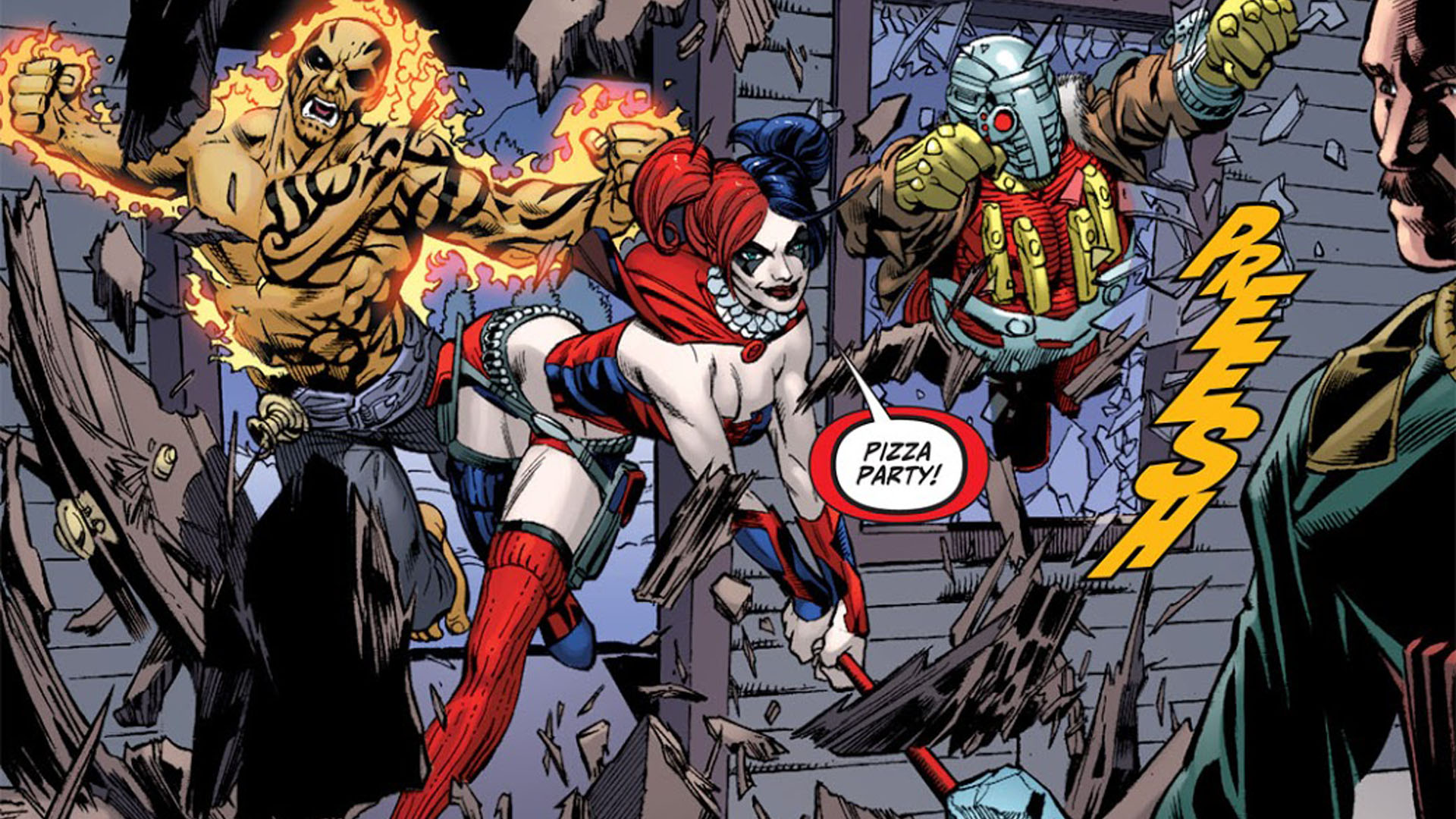
Isherwood: I would say the first thing is Harley Quinn came on also late! King John's take on her, her failings, her response to blackguard, etc.would have fit in marvelously with the relaxation of the team.
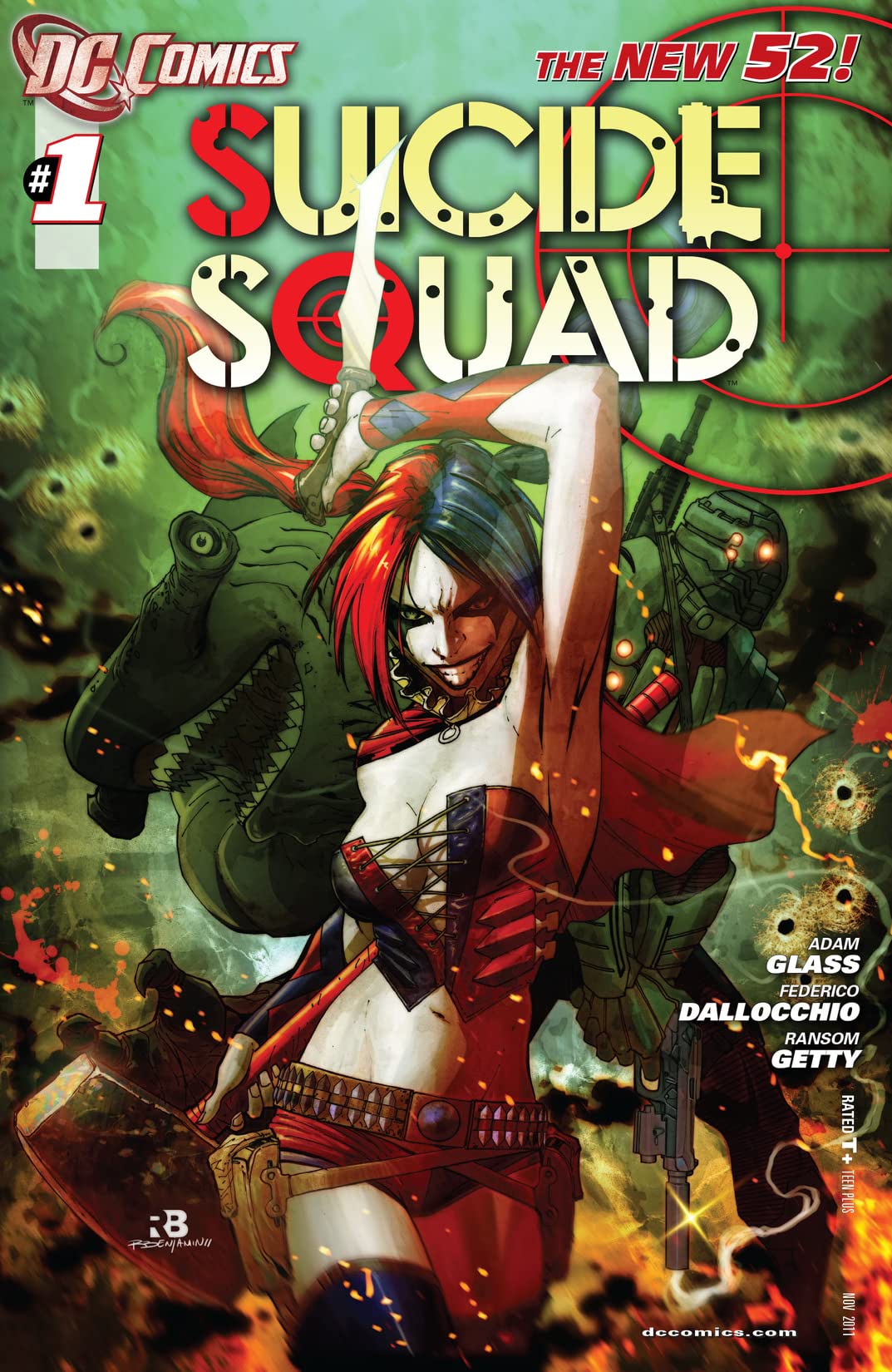
Glass: DC knew my writing from Marvel's Deadpool, Luke Cage, and CW's Supernatural. I did both smaller books for them, and they asked me if I wanted to do a book, which would it atomic number 4? And I said Suicide Squad, and they said okay.
Pat McCallum was my editor, and is a guy who deserves a lot of credit. When I told him I wanted Harley on the team he didn't blink, he instantly sawing machine IT and helped me draw DC to O.K. it. And she was the gamey changer.
Deadshot was a no-brainer, there is No Squad without Floyd. And I darling what Gail Simone had finished King Shark, then I knew helium'd be fun, and I welcome Boomer back for sure, and everyone else fell in line.
I thought John did such a great job tackling world issues, so I wanted my book to feel like a romp geartrain. Humor, case, story, battle, and action were the goals.
Wherefore the Suicide Squad rear end never die
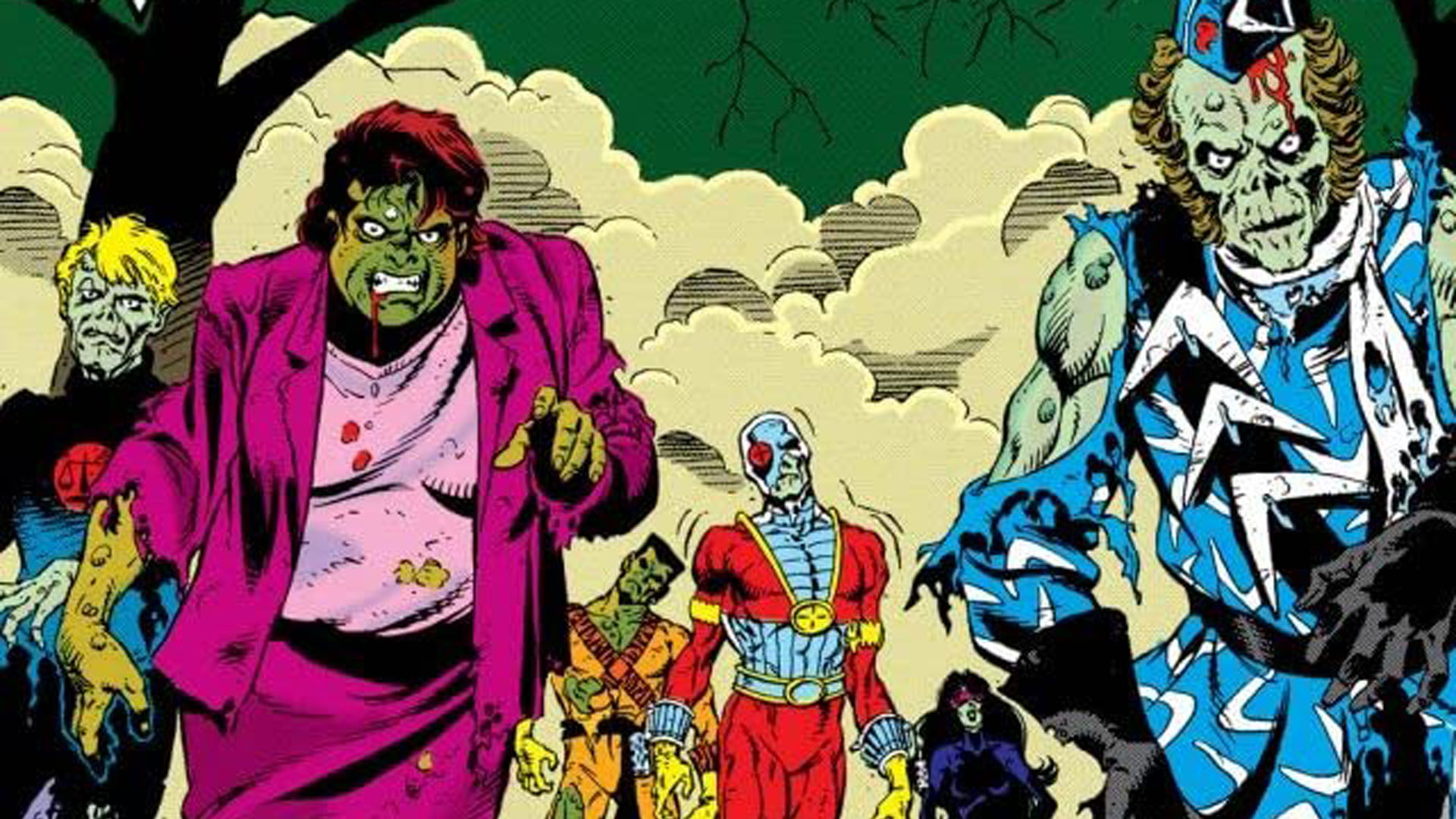
Gilt: Wherefore has the Squad proven to exist such an enduring concept? Amanda Waller. Pure and simple (to say about a character who, indeed, is neither). She is unique and John's handling of the character was spot-on.
And kind of courageous for the time: there weren't a lot of large dark-skinned women bossing antheral characters around - you know, equivalent the Batman - and getting away with it.
Kesel: As for the Squad's cult following: like they say in West Broadside Story - When you're a Honey oil, you're a Spurt all the way of life. People who love the team love the Squad. And I'm certainly nonpareil of them.
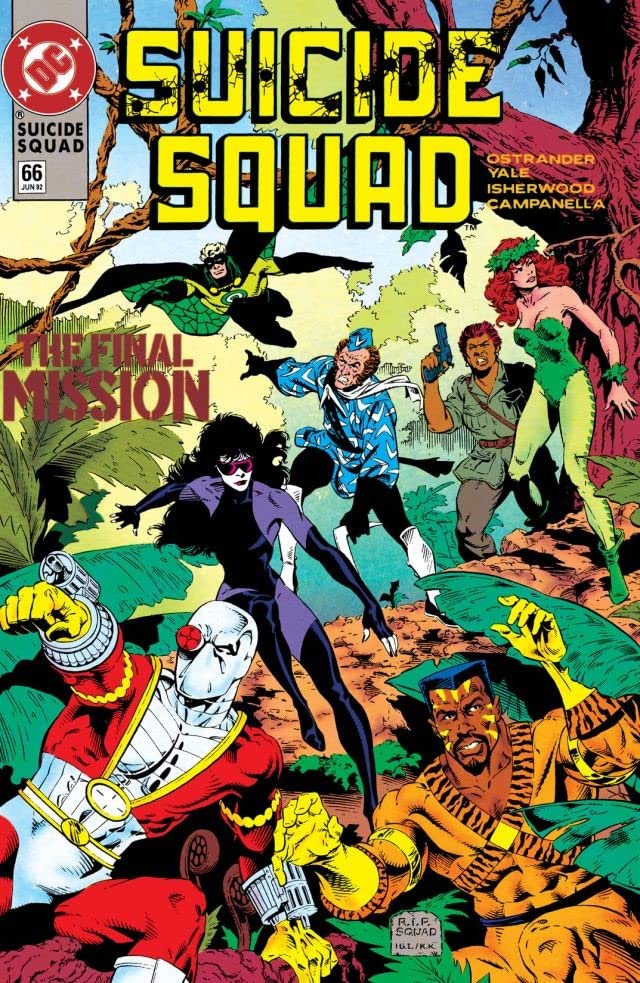
And, really, that comes fine-tune to John's writing, and the creative surround he encouraged. John was doing things that had never been through in comics before. And in some respects we were working under the radar, so we could get out with these things! It was very interesting and energizing, and that forever comes through on the pageboy. Always.
Greenberger: Unity of the original run's strengths - and unrivaled overlooked away subsequent editors and teams - is that we interracial heroes in need of redemption with villains hoping for repurchase or release. Each was on the team for a reason, and as John explored those reasons, they grew and transformed from Curse to Nightshade to Deadshot etcetera.
These were characters that were different by the time I stopped redaction with #31 from when we first introduced them in issue #1.
Glass: IT's some the bad guys doing good. The villain being a Heron. It's about repurchase, and I think we all crapper touch on to that.
Kesel: I've worked on very much of great comics in my career. Been lucky enough to work with some of the top writers and artists in the field. And I would drop everything in a Untried York minute to act with John on Suicide Squad once again.
Live or drop dead, these are the greatest Felo-de-se Squad members of complete time.
[Editor program's Notation: This article was originally published in 2016.]

Source: https://www.gamesradar.com/the-oral-history-of-dcs-original-suicide-squad/
Posted by: bridgecoss1946.blogspot.com
0 Response to "The oral history of DC's original Suicide Squad - bridgecoss1946"
Post a Comment